Hamilton & Chase Tours
Essence of Japan — Private Package 9-day Japan tour: Tokyo, Mt Fuji’s reflection at Hakone, Kyoto’s temples and Gion, Nara’s sacred deer.

9-Day Private Package Journey

Essence of Japan

Tokyo, Mt Fuji’s reflection at Hakone, Kyoto’s temples and Gion, Nara’s sacred deer.

Available as Private Semi-Private Self-Guided
From €3,990 per person 9 days / 8 nights
View Itinerary

Tour Overview

9 days across Japan.

Japan disorients visitors who arrive expecting Asia and find something entirely its own. Tokyo is the largest city on earth and operates with a precision and quiet that no city of comparable scale achieves. Kyoto contains 1,600 Buddhist temples and 400 Shinto shrines in a valley between forested mountains, and the best of them are not on the main tourist circuit. Nara has deer that have been considered sacred for 1,300 years and walk through the crowds without concern. Osaka feeds people as its primary cultural activity. The bullet train connects all of it in hours. This nine-day private journey is the right introduction to Japan for first-time visitors — covering the essential experiences without rushing past any of them, with private guides who understand what you are looking at and can explain why Japan is the way it is.

Detailed Itinerary

Your journey, day by day.

Every day is designed with breathing room. Sleep in, take a detour, linger at lunch — the itinerary flexes around you, not the other way around.

Day 1 — Arrival in Tokyo
Day 1
1

Day 1

Arrival in Tokyo

The city that redefines scale.

Tokyo announces itself from the airport train: twenty minutes of industrial port, then the density building as the train approaches the city centre, and then the sudden realisation that this is the largest urban agglomeration on earth — 37 million people in a metropolitan area that functions, on the surface, with more visible calm and order than most European cities of one-tenth the size. Your private driver meets you at Narita or Haneda and delivers you to your hotel in Shinjuku, Shibuya, or the historic Asakusa district depending on your preference. The afternoon at leisure: the first neighbourhood walk, the first bowl of ramen at a counter where you order by vending machine, the first experience of Japanese convenience stores — where the quality and variety of ready food would pass for a restaurant in most countries. Welcome dinner at a restaurant your specialist has selected for your specific tastes: Tokyo has more Michelin stars than any other city in the world, but the best first meal is often at a counter serving the specific regional cuisine you have expressed interest in.

  • Private airport transfer
  • First Tokyo neighbourhood walk
  • Welcome dinner — Tokyo's extraordinary restaurant culture
  • The first experience of Japanese urban precision
4–5★ hotel, Tokyo
Day 2 — Tokyo: The Ancient and the Hyper-Modern
Day 2
2

Day 2

Tokyo: The Ancient and the Hyper-Modern

The 7th-century temple district and the world's busiest crossing.

Tokyo layers its centuries without apology, and the private guide who meets you after breakfast has been working in this city for twenty years and treats the apparent contradictions as its defining quality. Asakusa is where Tokyo began: the Senso-ji temple founded in 645 AD, the Nakamise shopping street leading to the Kaminarimon gate, the five-storey pagoda, and the incense cloud at the main hall that worshippers walk through for purification. The Sumida River and its bridges, then north to the Tokyo Skytree — the tallest tower in the world at 634 metres — for the aerial view of Tokyo's absolute flatness. After lunch: Harajuku (Takeshita Street, where Japanese youth fashion achieves heights of creative improbability), the Meiji Shrine in the forest at the centre of the city, and the Shibuya Scramble — the famous pedestrian crossing that sends 3,000 people in every direction simultaneously and is simultaneously Tokyo's most photographed moment and its most ordinary one.

  • Senso-ji temple in Asakusa — Tokyo's oldest and most visited
  • Tokyo Skytree — 634 metres above the city
  • Meiji Shrine in the zelkova forest
  • Shibuya Scramble — the most famous pedestrian crossing in the world
Meals: Breakfast 4–5★ hotel, Tokyo
Day 3 — Tokyo: Depth and Detail
Day 3
3

Day 3

Tokyo: Depth and Detail

The neighbourhood that the guidebooks don't lead you to.

Tokyo's best experiences are not the famous ones but the neighbourhood-level ones that require a guide who lives here. Yanaka — the old merchant quarter that survived the 1923 earthquake and the 1945 firebombing largely intact — has the low wooden shophouses, narrow lanes, and neighbourhood temples that Tokyo looked like before it became itself. The Yanaka cemetery with its cherry trees. The Nezu Shrine, a smaller and less-visited Fushimi Inari with its own tunnel of torii gates. The afternoon: teamLab Borderless or teamLab Planets — two of the world's most celebrated digital art installations, both permanently located in Tokyo, both requiring advance booking and both producing an experience that exists nowhere else. Evening in the Shinjuku or Ginza district, with time in one of the department store basement food halls (depachika) that are the most concentrated display of Japanese food culture in the country.

  • Yanaka neighbourhood — the Tokyo that survived
  • Nezu Shrine torii tunnel — fewer crowds than Fushimi
  • teamLab digital art installation — advance booking required
  • Depachika food hall — the basement of a Japanese department store
Meals: Breakfast 4–5★ hotel, Tokyo
Day 4 — Hakone: Mt Fuji's Reflection
Day 4
4

Day 4

Hakone: Mt Fuji's Reflection

The lake, the ryokan, and the mountain that is Japan.

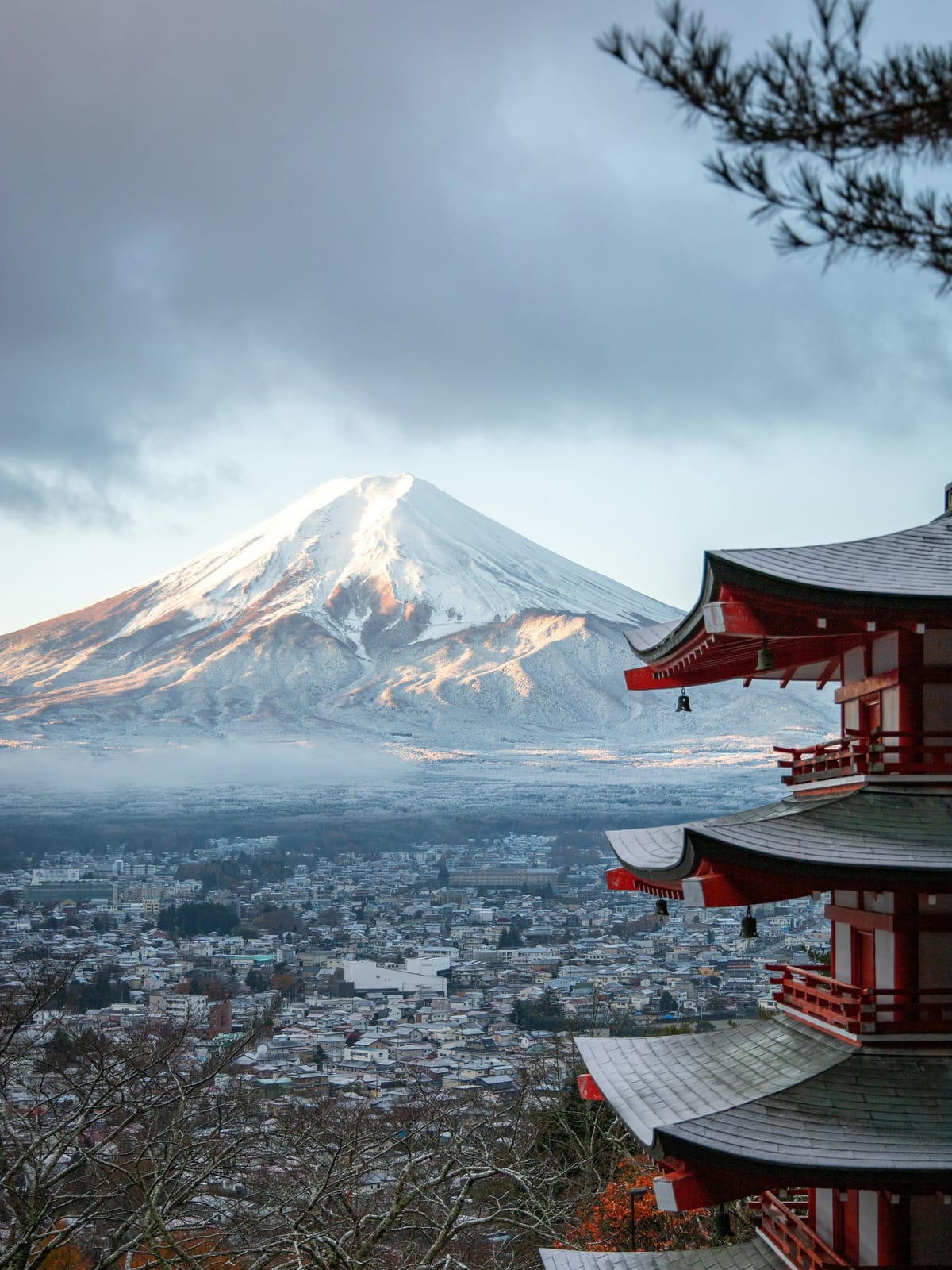
The drive from Tokyo to Hakone takes ninety minutes through the southern Kanto plain, and the approach to Hakone — the volcanic region with Mt Fuji on its northern horizon — is the first encounter with a Japan that is not urban. Hakone's defining experience is Ashinoko Lake on a clear morning, when Mt Fuji appears in perfect reflection in the still water and explains in an instant why this mountain has been the central image of Japanese art since the 17th century. Your private guide takes you through the Hakone Open-Air Museum — one of the finest outdoor sculpture collections in Asia, set in the mountain landscape — and the Hakone Barrier (Checkpoint) that controlled the road to Edo for two centuries. Your overnight accommodation is a traditional ryokan: tatami mat rooms, a kaiseki dinner of ten or twelve courses served in the room, and yukata robes. The shared or private onsen (hot spring bath) is fed by the volcanic water of the Hakone caldera.

  • Ashinoko Lake — Mt Fuji reflected in still water
  • Hakone Open-Air Museum
  • Traditional ryokan with kaiseki dinner
  • Volcanic onsen hot spring bath
Meals: Breakfast Traditional ryokan, Hakone
Day 5 — Kyoto: The Ancient Capital
Day 5
5

Day 5

Kyoto: The Ancient Capital

The city that preserved Japanese civilisation.

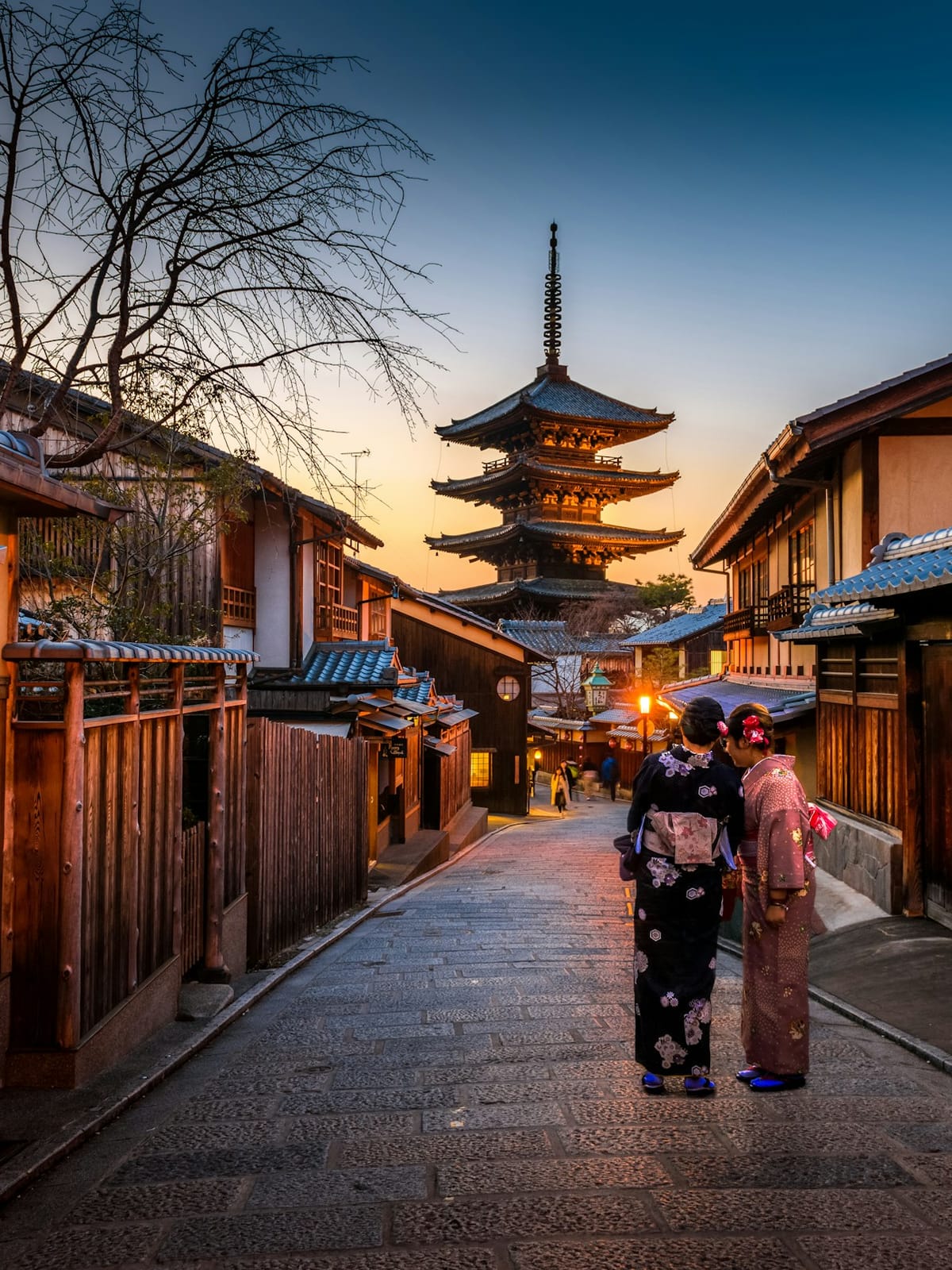
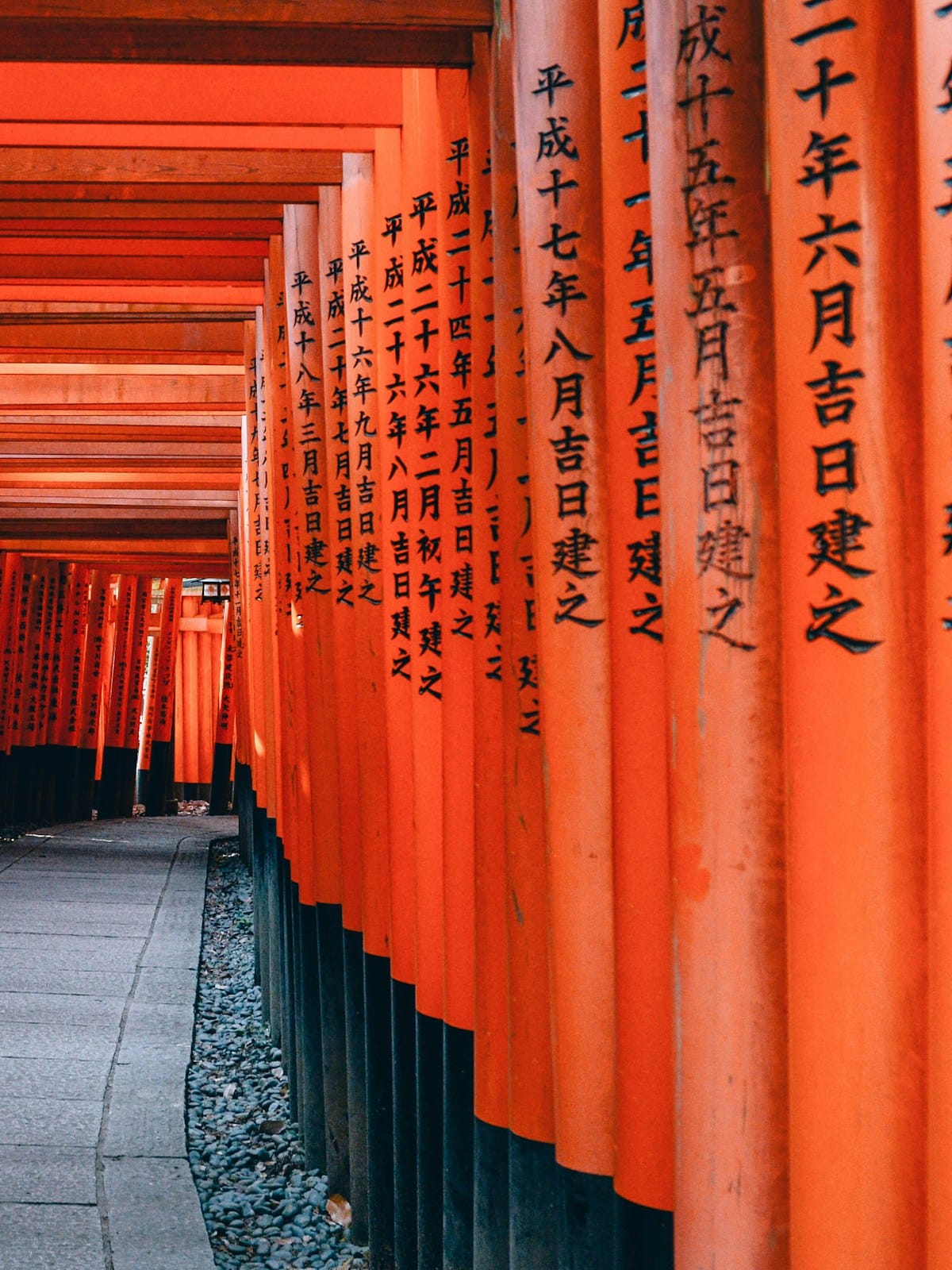
The Shinkansen bullet train from Odawara to Kyoto takes seventy-five minutes and deposits you in the city that was the imperial capital of Japan for a thousand years. Kyoto was spared from the 1945 firebombing specifically because of its cultural importance — a decision whose consequences are visible on every street: 1,600 Buddhist temples, 400 Shinto shrines, seventeen UNESCO World Heritage Sites, the intact geisha districts, and the craft traditions in lacquer, ceramics, textiles, and metalwork that the imperial court required for a millennium. Your private guide — a Kyoto specialist who has been working the city's cultural sites for fifteen years — meets you at the hotel. The afternoon: Fushimi Inari Taisha, the Shinto shrine dedicated to the fox deity Inari, whose ten thousand vermillion torii gates form a tunnel up the mountain behind the city. The lower gates are busy; two hours up the mountain, the path is quiet and the forest closes around you. Gion in the evening: the preserved machiya townhouse district where maiko and geiko still walk to their engagements.

  • Shinkansen from Hakone to Kyoto
  • Fushimi Inari — ten thousand torii gates up the mountain
  • Gion district — machiya townhouses and geiko in the evening
  • Kyoto private specialist guide
Meals: Breakfast 4–5★ hotel, Kyoto
Day 6 — Kyoto: Arashiyama and the Temple Gardens
Day 6
6

Day 6

Kyoto: Arashiyama and the Temple Gardens

The bamboo, the river, and the Zen gardens.

Arashiyama is at the western edge of Kyoto where the Oi River emerges from the forested mountains, and its bamboo grove — a dense stand of Moso bamboo whose stalks creak in the wind and filter the light green — is the most photographed natural feature in Japan. Your private guide takes you there before the tour groups arrive at nine. The Tenryu-ji temple and its Zen garden, considered the finest garden in Japan when it was created in 1339 and still maintained to its original design. The Okochi Sanso villa on the mountain above Arashiyama, whose gardens cascade down toward the valley and whose owner — a silent film actor — spent the last decades of his life perfecting them. Return to central Kyoto for the afternoon: Nijo Castle and the nightingale floors installed to squeak underfoot as an alarm against assassins, the Nishiki Market — the narrow covered food market whose stalls sell pickles, tofu, and matcha products with the precision that Kyoto applies to everything.

  • Arashiyama bamboo grove — before nine in the morning
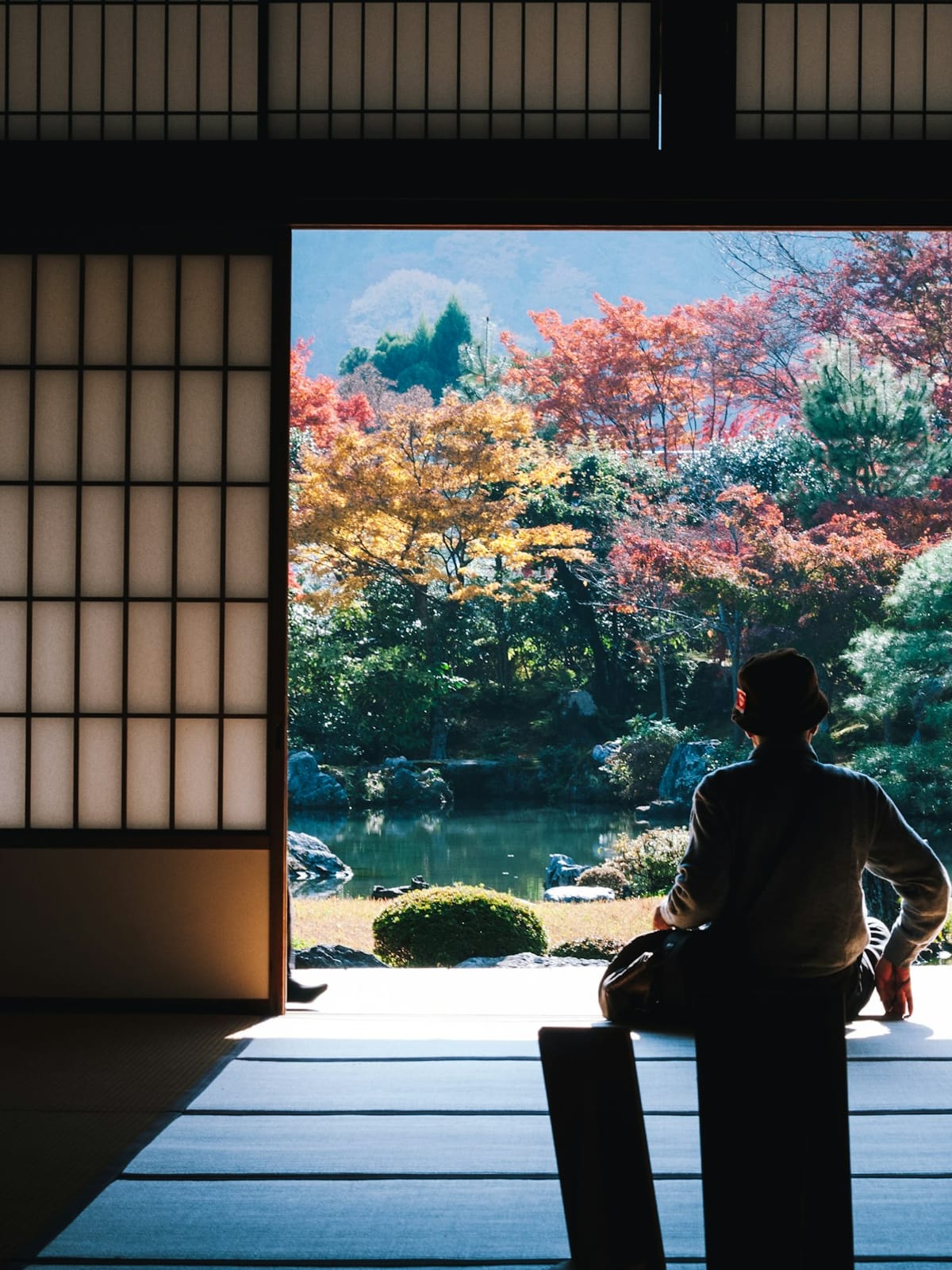
  • Tenryu-ji UNESCO Zen garden — the finest in Japan
  • Nijo Castle and the nightingale floors
  • Nishiki Market — Kyoto's kitchen
Meals: Breakfast 4–5★ hotel, Kyoto
Day 7 — Nara: The Sacred Deer
Day 7
7

Day 7

Nara: The Sacred Deer

The deer that have been sacred for 1,300 years and know it.

Nara is forty minutes from Kyoto by train and was Japan's first permanent capital, established in 710 AD. Its central attraction is the 1,200 deer that roam freely through Nara Park — considered divine messengers of the Kasuga Taisha shrine since the 8th century, protected by imperial decree for most of the time since, and currently maintained at their historic number by the city. The deer approach people for the special crackers (shika senbei) sold by vendors throughout the park, bow when they are offered one, and eat from your hand with complete indifference to the attention they receive. Todai-ji — the Great Buddha Hall, the largest wooden structure in the world, housing a bronze Buddha 15 metres tall cast in 743 AD — is the centrepiece of the Nara World Heritage Site. Kasuga Taisha shrine, whose 3,000 stone and bronze lanterns are lit twice a year, and the Isui-en garden, one of the finest in the Meiji period with the Great Buddha Hall framed in the background. Return to Kyoto for the evening.

  • Nara's sacred deer — 1,200 free-roaming in the park
  • Todai-ji — the largest wooden structure in the world
  • Kasuga Taisha shrine — 3,000 lanterns in the forest
  • Isui-en garden with Todai-ji in the view
Meals: Breakfast 4–5★ hotel, Kyoto
Day 8 — Osaka: The City That Eats
Day 8
8

Day 8

Osaka: The City That Eats

The best street food in Japan and the people who invented the concept.

Osaka is thirty minutes from Kyoto by Shinkansen and is the anti-Kyoto: loud, commercial, self-deprecating, and devoted to food in a way that has its own name — kuidaore, meaning 'eat until you drop'. Osaka's Dotonbori canal district is the most concentrated food street in Japan: takoyaki (octopus balls), okonomiyaki (savoury pancake), kushikatsu (deep-fried skewers), and the restaurants that have been serving Osaka soul food for generations. Your private guide navigates the food, the history, and the culture in equal parts: Osaka Castle, whose reconstruction in 1931 sits within the original 16th-century stone walls and moat that Toyotomi Hideyoshi built to unify feudal Japan; the Kuromon Ichiba market, the city's kitchen for two hundred years; and Shinsekai — the 1912 entertainment district whose Tsutenkaku Tower has been the city's symbol since its rebuilding in 1956. Dinner at a restaurant your guide recommends for the specific Osaka cuisine you have been building toward all week.

  • Dotonbori — the most concentrated food street in Japan
  • Takoyaki, okonomiyaki, kushikatsu — the Osaka table
  • Osaka Castle and its 16th-century stone walls
  • Kuromon Ichiba market — Osaka's 200-year kitchen
Meals: Breakfast 4–5★ hotel, Osaka
Day 9 — Departure from Osaka
Day 9
9

Day 9

Departure from Osaka

One last Japanese morning.

The morning in Osaka at your own pace: the neighbourhood streets around your hotel, a breakfast at a local coffee shop where the morning set is a carefully constructed small ritual, or a final walk through the Kuromon Ichiba market to watch the day begin. Osaka's Kansai International Airport is thirty minutes from the city centre by express train. Your private driver transfers you to the airport at the agreed time. Japan tends to produce a specific response in visitors who are leaving: an immediate certainty that they will return, and an equally immediate awareness that they saw a fraction of what there is to see.

  • Final Osaka morning — neighbourhood streets
  • Kuromon market at opening
  • Private transfer to Kansai Airport
Meals: Breakfast

Where You'll Stay

Hand-picked hotels, every night.

We choose properties for character, location, and the kind of service that makes you feel looked after — not just checked in. Every hotel can be swapped for an alternative if you prefer.

4–5★ hotel, Tokyo

Tokyo

3 nights

4–5★ hotel

Shinjuku, Shibuya, or Asakusa

Location choice depends on preference — Asakusa for old Tokyo atmosphere; Shinjuku for central convenience

Traditional ryokan, Hakone

Hakone

1 night

Traditional ryokan

Hakone or Gora

Ryokan with private or shared onsen — the kaiseki dinner is included in the room rate

4–5★ hotel, Kyoto

Kyoto

3 nights

4–5★ hotel

City centre or Higashiyama

Higashiyama area puts you in the historic district; city centre hotels offer greater convenience

4–5★ hotel, Osaka

Osaka

1 night

4–5★ hotel

Shinsaibashi or Dotonbori

Central location for the food districts and morning departure to the airport

Hotels shown are indicative of the standard we book. Upon request, we will provide a detailed itinerary with specific hotel options tailored to your preferences and budget.

What's in the Price

Included

  • 8 nights in 4–5★ hotels and one traditional ryokan
  • Daily breakfast at your hotel or ryokan
  • Private airport transfer in Tokyo
  • All private vehicle transfers
  • Shinkansen tickets Tokyo–Kyoto
  • Tokyo private guide (two days)
  • Kyoto private specialist guide (two days)
  • Nara private guide
  • teamLab digital art admission (pre-booked)
  • Hakone Open-Air Museum entry
  • Tenryu-ji garden entry
  • Nijo Castle entry
  • Todai-ji and Nara Park entry
  • All entrance fees for guided visits
  • 24/7 travel specialist support
  • Hamilton & Chase digital travel booklet with neighbourhood guide and restaurant recommendations

Not Included

  • International flights to/from Japan
  • Travel insurance (required — we can arrange on request)
  • Meals not listed
  • Personal expenses
  • Gratuities for guides and drivers
  • Accommodation tax (collected by hotels)

Good to Know

  • Japan Rail Pass (if purchased before arrival) covers all Shinkansen travel on this itinerary — your specialist will advise on whether a pass or individual tickets is more economical for your group.
  • teamLab Borderless relocated in 2024 to Azabudai Hills in central Tokyo — pre-booking is essential as same-day tickets are rarely available.
  • The ryokan experience includes specific etiquette — removing shoes, wearing yukata, the onsen protocol. Your guide will brief you in advance. It is an important part of the Japan experience and not something to skip.
  • Kyoto is extremely busy in cherry blossom season (late March–early April) and autumn colour season (mid-November). Accommodation must be booked well in advance for these periods.

Make It Yours

Optional add-ons & upgrades.

Every trip is different. These extras can be woven into your itinerary — just let your travel specialist know what catches your eye.

Mt Fuji fifth station

Drive to the Fuji Subaru Line Fifth Station at 2,305 metres — the highest point accessible by road on Mt Fuji, with the summit above and the Kanto plain below. Available July–October; closed in winter.

From €95 pp

Kinkaku-ji and the Golden Pavilion

Kyoto's most visited site — the 14th-century Zen temple whose top two floors are covered in gold leaf, reflected in the Kyokochi mirror pond. Best visited in the morning.

From €45 pp

Sake brewery visit, Fushimi

Fushimi in southern Kyoto is one of Japan's two great sake-producing districts — the pure spring water from the Momoyama hills and twenty-five active breweries. A private morning tour with tasting.

From €75 pp

Cooking class, Kyoto

A morning in a Kyoto kitchen learning the techniques of kaiseki — the seasonal multi-course cuisine that Kyoto developed for the imperial court. Dashi preparation, vegetable cutting, tofu work.

From €110 pp

"The Fushimi Inari gates at seven in the morning, with only a handful of other people climbing through the forest — that was the moment Japan became real to us. Our guide had warned us about what to expect, but the actual experience of coming around a corner to find a thousand more gates stretching upward through the cedar trees was something else entirely. Nine days was barely enough."

Michael & Laura T.

Vancouver, Canada · Essence of Japan, April 2025

Common Questions

Questions about this trip.

Is nine days enough for Japan?

For a first visit focused on Tokyo, Kyoto, and the essential experiences, yes. Nine days allows three nights in Tokyo, one in Hakone, three in Kyoto, and one in Osaka — enough time in each place to go beyond the surface. Guests who return to Japan typically extend the Kyoto section or add Hiroshima and Miyajima. The Epic Japan itinerary at fourteen days covers the country more completely.

What is a ryokan?

A traditional Japanese inn — tatami mat rooms, futon bedding laid out by the staff, a multi-course kaiseki dinner served in your room, and access to onsen hot spring baths fed by volcanic or mineral water. The etiquette (removing shoes, wearing the inn's yukata robe, the correct use of the onsen) is explained by your guide in advance. It is one of the most distinctive hospitality experiences in the world.

Private Package Journey

Essence of Japan

9 days / 8 nights

From €3,990

per person

Ready to go?

Share a few details and a specialist will reply within one business day.

More Japan Tours

Prefer to Talk?

Available Mon–Fri 9am–6pm CET.
On-trip support is 24/7.

Plan My Trip