Hamilton & Chase Tours
Japanese Alps & Mountains — Private Package 10-day Japan tour: Kamikochi’s car-free alpine valley, Shirakawa-go’s thatched villages, and Kanazawa’s Edo city.

10-Day Private Package Journey

Japanese Alps & Mountains

Kamikochi’s car-free alpine valley, Shirakawa-go’s thatched villages, and Kanazawa’s Edo city.

Available as Private Semi-Private Self-Guided
From €4,790 per person 10 days / 9 nights
View Itinerary

Tour Overview

10 days across Japan.

Japan has three mountain ranges called the Japanese Alps — the Hida, Kiso, and Akaishi ranges — and they run down the spine of Honshu in a sequence of peaks exceeding 3,000 metres. Kamikochi is the valley at the heart of the Hida range: a flat-floored glacial valley at 1,500 metres, closed to private vehicles, accessible only by bus from the tunnel entrance, and one of the most important conservation areas in Japan. The mountains here are the Hodaka range — Okhotsk-aligned peaks whose names appear in Japanese mountaineering history the way the Eiger and Matterhorn appear in European accounts. This ten-day private journey uses the mountains as the connective tissue between Tokyo and Kyoto: Nikko's mountain shrines, Kamikochi's alpine valley, Shirakawa-go's UNESCO-listed thatched farmhouses in their mountain setting, and the Japanese Alps as the context for understanding a country where the mountains are not a backdrop but the dominant geographical fact.

Detailed Itinerary

Your journey, day by day.

Every day is designed with breathing room. Sleep in, take a detour, linger at lunch — the itinerary flexes around you, not the other way around.

Day 1 — Arrival in Tokyo
Day 1
1

Day 1

Arrival in Tokyo

The city before the mountains.

Your private driver meets you at Narita or Haneda and delivers you to your hotel in central Tokyo. The afternoon at leisure: the first neighbourhood walk, the first encounter with Japanese precision in ordinary life — the railway station, the convenience store, the pedestrian crossing. Welcome dinner at a restaurant your specialist has selected: the yakitori counter with charcoal smoke, the tonkatsu restaurant with its perfectly crumbed pork, the shabu-shabu where paper-thin beef is swirled in hot broth at the table. Tokyo's food culture is a serious subject and the right first dinner is the beginning of a ten-day education.

  • Private airport transfer
  • First Tokyo evening walk
  • Welcome dinner — the beginning of Japanese food culture
4–5★ hotel, Tokyo
Day 2 — Tokyo: The City in Context
Day 2
2

Day 2

Tokyo: The City in Context

Ancient temple district, cedar forest, and the mountain view from the rooftop.

Your private guide begins in Asakusa — the Senso-ji temple district that is the oldest part of Tokyo, with the Kaminarimon gate, the Nakamise shopping street, and the five-storey pagoda above the Sumida River. North to the Ueno district: the Tokyo National Museum, the finest collection of Japanese art in existence, whose Horyuji Treasures gallery holds objects from the 7th-century temple at Nara. The afternoon in Shinjuku: the Shinjuku Gyoen national garden, whose 58 hectares of formal French, English, and Japanese garden sections in the centre of the city provide the most unusual perspective on Tokyo's density. The Shinjuku Government Building's free observatory at 243 metres for the view — on a clear day, Mt Fuji appears above the southwest horizon. In the evening: Shinjuku's Golden Gai — the 200 tiny bars in six narrow alleys where Tokyo's film directors, writers, and musicians have been drinking since the 1950s.

  • Senso-ji and Asakusa — Tokyo's oldest district
  • Tokyo National Museum — the finest Japanese art collection
  • Shinjuku Gyoen garden — formal gardens in the urban centre
  • Mt Fuji from the Shinjuku observatory on a clear evening
Meals: Breakfast 4–5★ hotel, Tokyo
Day 3 — Nikko: The Shogun's Mountain Mausoleum
Day 3
3

Day 3

Nikko: The Shogun's Mountain Mausoleum

13,000 cedars and the most ornate shrine complex in Japan.

Nikko is two hours north of Tokyo in the mountains of Tochigi prefecture, and the Tosho-gu shrine complex is the most elaborately decorated religious site in Japan. Built in 1634–1636 to house the mausoleum of Tokugawa Ieyasu — the shogun who unified Japan and whose dynasty ruled for 265 years — the complex has 508 carved animals on the Yomeimon gate alone. The three wise monkeys (hear no evil, speak no evil, see no evil) above the Sacred Stable; the sleeping cats above the gateway to the inner shrine; and the 13,000 Japanese cedars planted on the approach by a feudal lord who could not afford gold leaf and gave trees instead. Your private guide explains the political theology of the complex — what the Tokugawa shogunate was saying about power, religion, and legitimacy through the architecture. The Rinno-ji temple, the Futarasan Shrine at the base of Mt Nantai, and the walk along the cedar avenue. Return to the ryokan at Chuzenji Lake in the late afternoon.

  • Tosho-gu shrine — Yomeimon gate and 508 carved animals
  • Three wise monkeys — the original Japanese carving
  • 13,000-cedar avenue planted by a feudal lord
  • Chuzenji Lake ryokan overnight
Meals: Breakfast Traditional ryokan, Nikko / Chuzenji
Day 4 — Into the Japanese Alps
Day 4
4

Day 4

Into the Japanese Alps

The mountain road to Matsumoto and the castle in the valley.

The drive from Nikko west into the Japanese Alps takes the mountain roads through Nikko National Park — past the Kegon Waterfall at 97 metres (one of the three most celebrated waterfalls in Japan) and west through the mountain passes to Matsumoto on the western edge of the Nagano basin. Matsumoto is the gateway city for Kamikochi and has one of the finest castles in Japan: Matsumoto-jo, whose black-and-white five-storey keep was built in 1594 and has never been destroyed or significantly reconstructed — making it one of only twelve original castles surviving in Japan. The castle is reflected in the moat, the mountains above the city, and the light in the late afternoon. Your hotel in Matsumoto or directly at the Kamikochi access town of Sawando.

  • Kegon Waterfall — 97 metres, one of Japan's three great falls
  • Mountain road through Nikko National Park
  • Matsumoto Castle — one of Japan's twelve original castles
  • First view of the Hida Alps
Meals: Breakfast Mountain lodge or hotel, Matsumoto / Kamikochi gateway
Day 5 — Kamikochi: The Heart of the Japanese Alps
Day 5
5

Day 5

Kamikochi: The Heart of the Japanese Alps

The flat alpine valley that the Japanese have been protecting since 1927.

Kamikochi has been closed to private vehicles since 1975 — entry is by bus from the Kama tunnel entrance, and the effect is a mountain valley of extraordinary preservation: the Azusa River running clear over gravel between stands of larch, the Hodaka peaks (Okhotsk Ridge, Oku-Hotaka-dake at 3,190 metres) directly above, and the Kappa Bridge suspension bridge — the most photographed spot in the Japanese Alps — at the valley centre. Your private guide leads the valley circuit: from Kappa Bridge east to the Myojin Pond at the foot of Mt Myojin, where the water is dark and reflects the mountain walls in the morning. The ponds are a Shinto sacred site — the Hotaka Shrine at Myojin Pond is the inner sanctuary of the Hotaka Shrine complex. Optional extension: the trail from Myojin Pond to Tokusawa, deeper into the valley, where the Japanese macaques come to the river in the late afternoon. The most beautiful mountain valley in Japan and consistently cited by Japanese mountaineers as the place they return to first.

  • Kamikochi — car-free, protected Japanese Alpine valley
  • Kappa Bridge and the Hodaka peaks above
  • Myojin Pond Shinto sacred site
  • Japanese macaques at the river in the late afternoon
Meals: Breakfast Mountain lodge, Kamikochi
Day 6 — Shirakawa-go: The Thatched Mountain Village
Day 6
6

Day 6

Shirakawa-go: The Thatched Mountain Village

The UNESCO farmhouses that survived because they were too remote to reach.

Shirakawa-go in the Shogawa River valley is a cluster of gassho-zukuri farmhouses — the 'praying hands' style of steeply pitched thatched roofs designed to shed the heavy mountain snowfall — that was preserved by its inaccessibility until the road arrived in the 1970s. UNESCO World Heritage listed in 1995. The largest farmhouse, the Wada House, is open to visitors: five floors under the thatched roof, the lowest for human habitation, the upper floors for silkworm cultivation. Your guide explains the communal system (yui) by which the entire village participates in re-thatching each house — a roof that requires 200 people and four days to replace, done in rotation so that each house is re-thatched every thirty years. The view of the village from the Shiroyama Viewpoint: fifty rooftops in the valley, the mountains above. Dinner in Shirakawa-go at the lodge before the evening quiet.

  • Shirakawa-go UNESCO thatched farmhouses
  • Wada House — five floors under the 'praying hands' roof
  • Shiroyama Viewpoint — the village from above
  • Yui community re-thatching system explained
Meals: Breakfast Gassho-zukuri lodge or hotel, Shirakawa-go / Kanazawa
Day 7 — Kanazawa: The City That Escaped the War
Day 7
7

Day 7

Kanazawa: The City That Escaped the War

Japan's most complete Edo-period city.

Kanazawa was Japan's second-largest city after Edo (Tokyo) in the Edo period and is the only major Japanese city that was neither bombed nor significantly damaged in the 20th century — the result is the most complete collection of Edo-period urban fabric in Japan. The Kenroku-en garden, one of the three great gardens of Japan, has been accumulating its trees, ponds, and stone lanterns for three centuries. The Higashi Chaya geisha district: three blocks of 19th-century machiya townhouses preserving the architecture of the entertainment district that served Kanazawa's merchant class. The Omicho market, operating on the same site since the 1700s, where the Kanazawa seafood — the snow crab, the buri yellowtail, the noto oysters — is the best in Japan after Hokkaido. Dinner at a restaurant in the Higashi Chaya district with the Kanazawa seafood as the focus.

  • Kenroku-en — one of the three great gardens of Japan
  • Higashi Chaya geisha district — intact Edo-period townhouses
  • Omicho market — Kanazawa's extraordinary seafood
  • The only major Japanese city never bombed
Meals: Breakfast 4–5★ hotel, Kanazawa
Day 8 — Kyoto: Arrival in the Ancient Capital
Day 8
8

Day 8

Kyoto: Arrival in the Ancient Capital

The torii gates and the geisha district on the first evening.

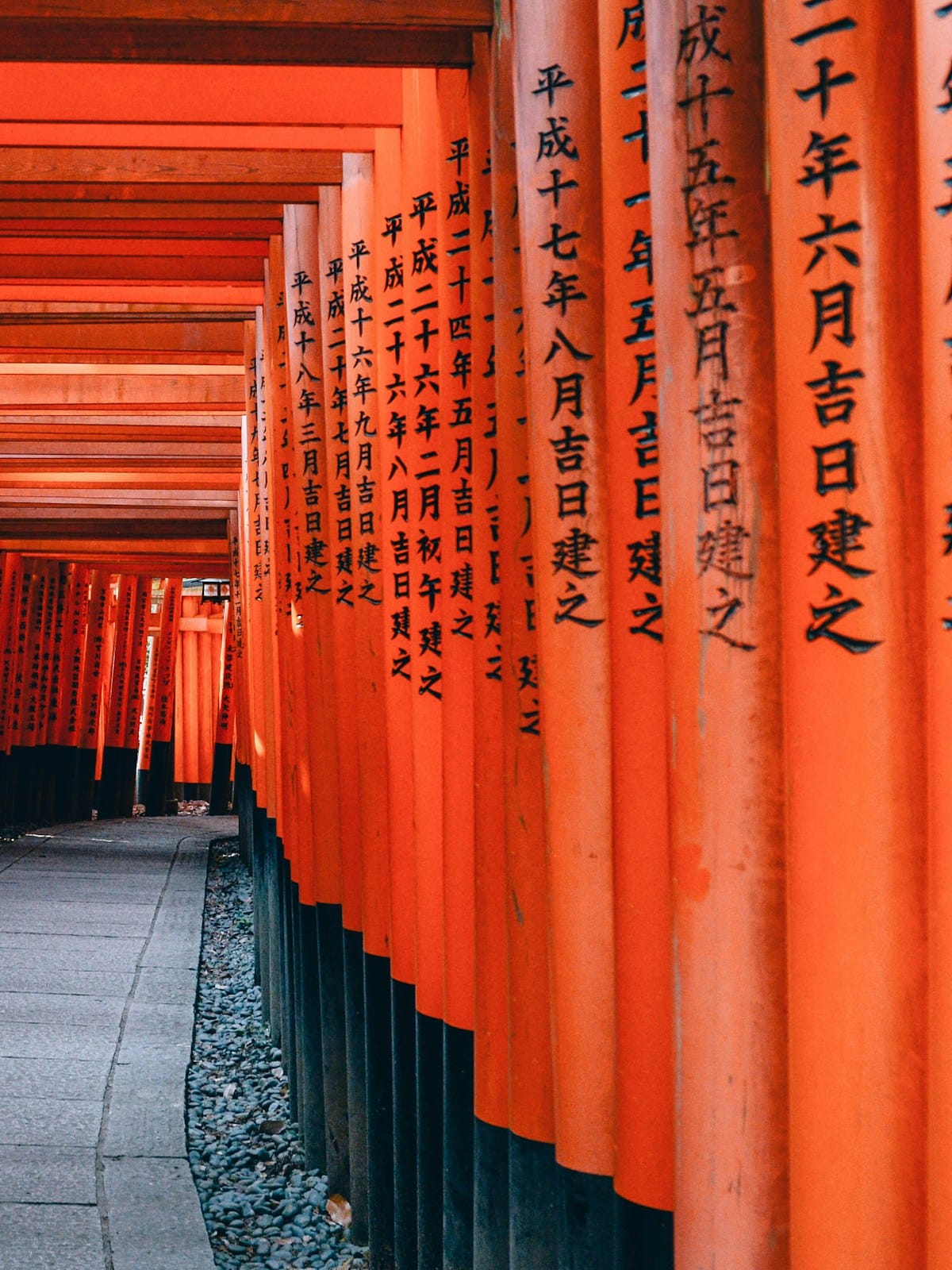
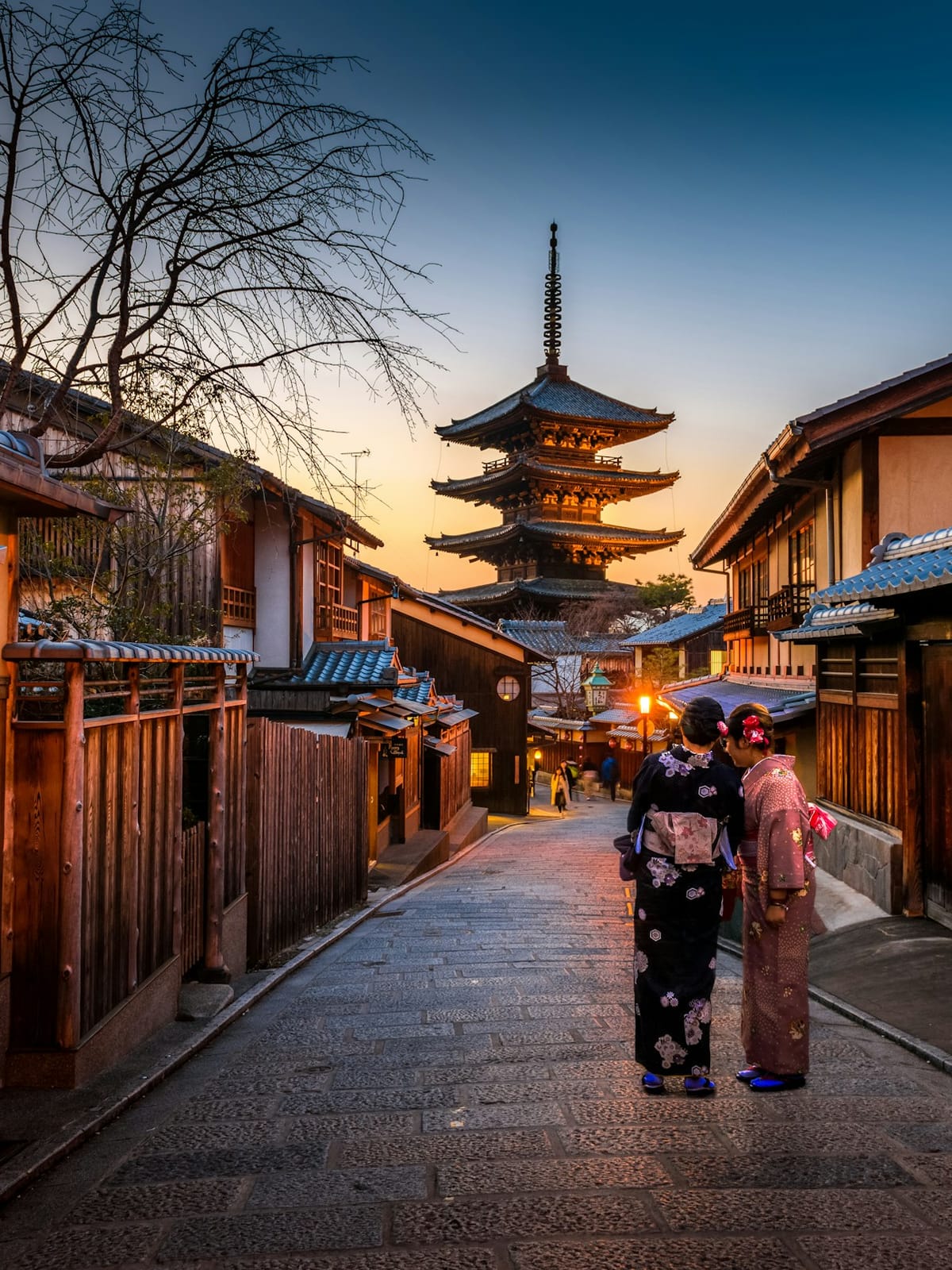
The drive or express train from Kanazawa to Kyoto takes ninety minutes. Kyoto was Japan's imperial capital for a thousand years, was deliberately spared from the 1945 firebombing, and contains 1,600 temples and 400 shrines — the most concentrated collection of Japanese cultural heritage in existence. Your private Kyoto guide meets you at the hotel for the afternoon: Fushimi Inari Taisha and its ten thousand vermillion torii gates ascending the mountain, best walked in the late afternoon when the light comes through the gate-tunnel at a low angle and the upper mountain paths are quiet. Gion in the evening: the preserved machiya townhouse district where maiko walk to their engagements as the lanterns come on.

  • Shinkansen or express train from Kanazawa to Kyoto
  • Fushimi Inari — ten thousand torii gates
  • Gion evening — maiko in the lantern district
  • Kyoto private specialist guide
Meals: Breakfast 4–5★ hotel, Kyoto
Day 9 — Kyoto: The Mountain Temples
Day 9
9

Day 9

Kyoto: The Mountain Temples

The temples where the mountains and the city meet.

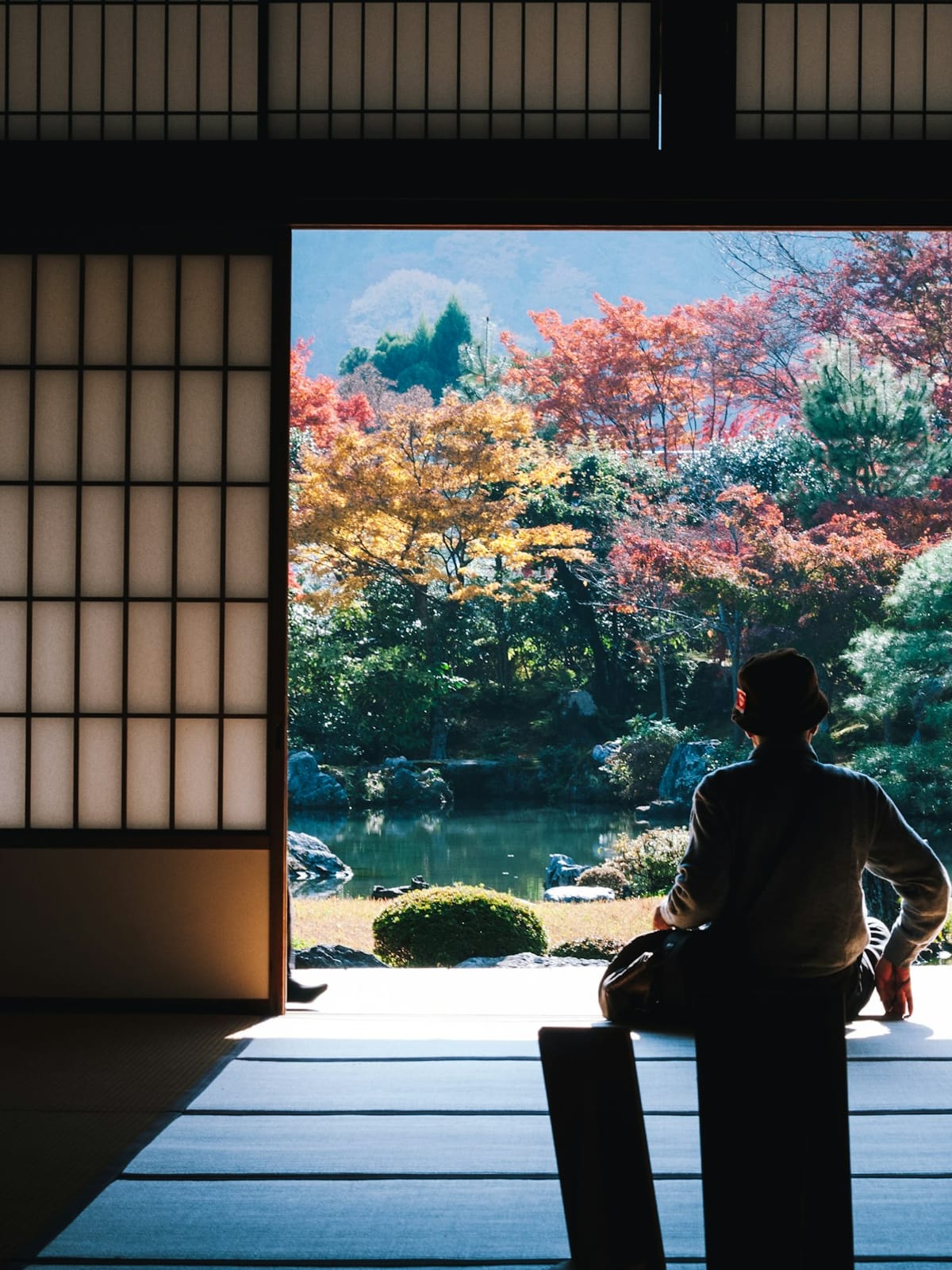
Kyoto's most atmospheric temples are not in the city centre but at its eastern and northern edges, where the forested mountains rise immediately behind the last streets. Kiyomizu-dera — the wooden stage temple built into the cliff face above Higashiyama, whose three-storey pagoda and main hall extend from the mountainside on 139 wooden pillars without a single nail, founded in 778 and rebuilt in 1633. The stone-flagged lanes of Higashiyama below: Ninnen-zaka and Sannen-zaka, the preserved Meiji-era merchant streets. Ginkaku-ji (the Silver Pavilion) at the northern end of the Philosopher's Path, and the canal-side walk itself: 2 kilometres of cherry trees, stone pavement, and the neighbourhood temples that line the route. Arashiyama in the afternoon for the bamboo grove before sunset.

  • Kiyomizu-dera — wooden stage temple built into the cliff, no nails
  • Higashiyama lanes — Ninen-zaka and Sannen-zaka
  • Philosopher's Path — two kilometres of canal and cherry trees
  • Arashiyama bamboo grove at sunset
Meals: Breakfast 4–5★ hotel, Kyoto
Day 10 — Departure from Osaka
Day 10
10

Day 10

Departure from Osaka

The food city and the airport.

A morning in Osaka — forty minutes from Kyoto by Shinkansen — for the Dotonbori food street and a final takoyaki at the counter that has been serving them since 1935. Osaka Castle in the morning light. The Kuromon Ichiba market. Your private driver transfers you to Kansai International Airport at the agreed time, with the Japanese Alps somewhere behind you and the certainty that Japan is a country that rewards return.

  • Osaka Dotonbori — final Japanese street food
  • Osaka Castle
  • Private transfer to Kansai Airport
Meals: Breakfast

Where You'll Stay

Hand-picked hotels, every night.

We choose properties for character, location, and the kind of service that makes you feel looked after — not just checked in. Every hotel can be swapped for an alternative if you prefer.

4–5★ hotel, Tokyo

Tokyo

2 nights

4–5★ hotel

City centre

Two Tokyo nights — city orientation before the mountain journey begins

Traditional ryokan, Nikko / Chuzenji

Nikko / Chuzenji

1 night

Traditional ryokan

Chuzenji Lake

Ryokan at the mountain lake above Nikko town

Mountain lodge, Matsumoto / Kamikochi gateway

Matsumoto / Kamikochi gateway

1 night

Mountain lodge

Matsumoto valley

Convenient base for the Kamikochi day — inside or close to the national park area

Mountain lodge, Kamikochi

Kamikochi

1 night

Mountain lodge

Kamikochi valley

Staying inside Kamikochi (after the day visitors leave) gives early morning access before the buses arrive — strongly recommended

Gassho-zukuri farmhouse lodge or hotel, Shirakawa-go / Kanazawa

Shirakawa-go / Kanazawa

1 night

Gassho-zukuri farmhouse lodge or hotel

Shirakawa-go village

Overnight inside the UNESCO village is possible in a gassho-zukuri farmhouse guest room

4–5★ hotel, Kanazawa

Kanazawa

1 night

4–5★ hotel

City centre

Near Kenroku-en garden and the Higashi Chaya district

4–5★ hotel, Kyoto

Kyoto

2 nights

4–5★ hotel

City centre or Higashiyama

Two Kyoto nights — the temple circuit and Arashiyama

Hotels shown are indicative of the standard we book. Upon request, we will provide a detailed itinerary with specific hotel options tailored to your preferences and budget.

What's in the Price

Included

  • 9 nights in 4–5★ hotels, mountain lodges, and one traditional ryokan
  • Daily breakfast at your hotel or ryokan
  • Private airport transfer in Tokyo
  • All private vehicle transfers
  • Shinkansen and express train tickets as required
  • Tokyo private guide
  • Kyoto private specialist guide
  • Nikko private guide and Tosho-gu entry
  • Kamikochi private mountain guide
  • Shirakawa-go guided village visit
  • Kanazawa guided tour — Kenroku-en and Higashi Chaya
  • Kegon Waterfall entry
  • Matsumoto Castle entry
  • Kiyomizu-dera entry
  • All entrance fees for guided visits
  • 24/7 travel specialist support
  • Hamilton & Chase digital travel booklet

Not Included

  • International flights to/from Japan
  • Travel insurance (required — we can arrange on request)
  • Meals not listed
  • Personal expenses
  • Gratuities for guides and drivers
  • Accommodation tax (collected by hotels)

Good to Know

  • Kamikochi is open only from late April to mid-November — it closes for the winter season. The best periods are late May–June (fresh green) and October–mid-November (autumn colour). Snow walls on surrounding peaks are visible May–June.
  • Staying inside Kamikochi overnight (at the Kamikochi Imperial Hotel or the lodge accommodations) is strongly recommended — the valley before 7am, after the day visitors have left, is a completely different experience from the midday crowds.
  • Shirakawa-go is most famous in winter with snow on the thatched roofs — if visiting December–March, the gassho-zukuri farmhouses in snow are the most photographed version. Summer visits focus on the agricultural setting and the green mountain context.
  • The mountain road sections between Nikko, Matsumoto, and Shirakawa-go involve narrow roads with switchbacks — your private driver is experienced on these routes.

Make It Yours

Optional add-ons & upgrades.

Every trip is different. These extras can be woven into your itinerary — just let your travel specialist know what catches your eye.

Tateyama Kurobe Alpine Route

The Tateyama Kurobe Alpine Route crosses the Hida Mountains by a combination of cable car, trolley bus, and ropeway — the most dramatic mountain crossing in Japan, with snow walls up to 20 metres high in late April and May

From €145 pp

Nara day trip from Kyoto

The 1,200 sacred deer, the Todai-ji Great Buddha Hall (the largest wooden structure in the world), and the Kasuga Taisha shrine with its 3,000 stone lanterns — forty minutes from Kyoto

From €95 pp

Mt Fuji fifth station

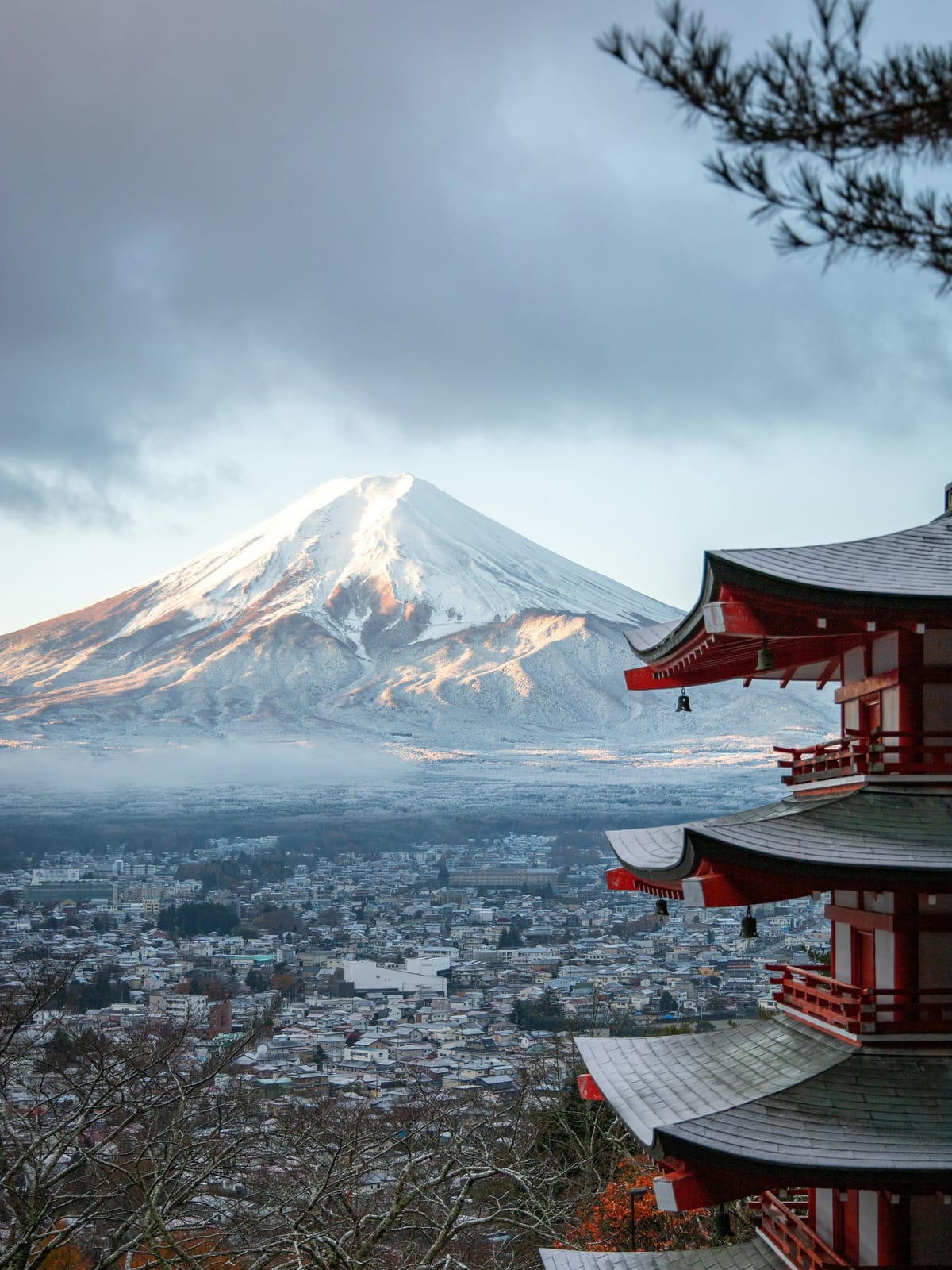
A detour from the Tokyo section to the Fuji Subaru Line Fifth Station at 2,305 metres — July–October only

From €95 pp

Sake tasting, Kanazawa

Kanazawa's pure mountain water makes it one of Japan's finest sake-producing cities — a private visit to a Kanazawa brewery with tasting of current and aged releases

From €65 pp

"Kamikochi was why we came. We had been told about the Japanese Alps for years by a friend who is a serious hiker. Standing on the Kappa Bridge at seven in the morning before the buses arrived, with the Hodaka peaks in the clear air above — it was absolutely worth the journey. And the Shirakawa-go farmhouses at dusk, after the day visitors had left. Hamilton & Chase understood exactly what we were looking for."

David & Sarah M.

Zurich, Switzerland · Japanese Alps & Mountains, October 2024

Common Questions

Questions about this trip.

Is this itinerary suitable for non-hikers?

Yes — the Kamikochi valley circuit is a flat 5km walk on maintained paths, entirely accessible to anyone who can walk comfortably for two hours. The Nikko and Shirakawa-go visits involve moderate walking on stone steps or village streets. Optional harder hikes are available in Kamikochi for those who want them, but the core itinerary requires no hiking fitness.

Can we see snow at any point on this itinerary?

Yes — in late April and May, Kamikochi and the surrounding Hodaka peaks still carry snow, and the snow walls on the Tateyama route (optional add-on) can reach 20 metres. Shirakawa-go in winter is one of the great Japanese winter landscapes. Your specialist will time the itinerary to match your preferences.

Private Package Journey

Japanese Alps & Mountains

10 days / 9 nights

From €4,790

per person

Ready to go?

Share a few details and a specialist will reply within one business day.

More Japan Tours

Prefer to Talk?

Available Mon–Fri 9am–6pm CET.
On-trip support is 24/7.

Plan My Trip