Hamilton & Chase Tours
Walled Cities of Croatia — Private Package 8-day Croatia tour: Split, Trogir, Korčula, and Dubrovnik — four medieval cities, each completely different.

8-Day Private Package Journey

Walled Cities of Croatia

Split, Trogir, Korčula, and Dubrovnik — four medieval cities, each completely different.

Available as Private Semi-Private Self-Guided
From €3,190 per person 8 days / 7 nights
View Itinerary

Tour Overview

8 days across Croatia.

The Dalmatian coast has more intact medieval walled cities than any comparable stretch of European coastline — a concentration that reflects centuries of Venetian investment in harbour fortifications, mercantile infrastructure, and civic architecture. Split is exceptional because its walls are Roman, not medieval. Trogir is exceptional because it is built on an island and has changed almost nothing since the 13th century. Korčula is exceptional because its herringbone street plan is still the functional layout of a living town. Dubrovnik is exceptional because the combination of walls, monuments, and public spaces survives intact from the 15th and 16th centuries. This eight-day private journey moves south through all four, spending enough time in each to understand what makes it different from the others. It is a journey for travellers who find medieval cities genuinely interesting rather than merely picturesque.

Detailed Itinerary

Your journey, day by day.

Every day is designed with breathing room. Sleep in, take a detour, linger at lunch — the itinerary flexes around you, not the other way around.

Day 1 — Arrival in Split
Day 1
1

Day 1

Arrival in Split

The Roman emperor's palace that is still a living city.

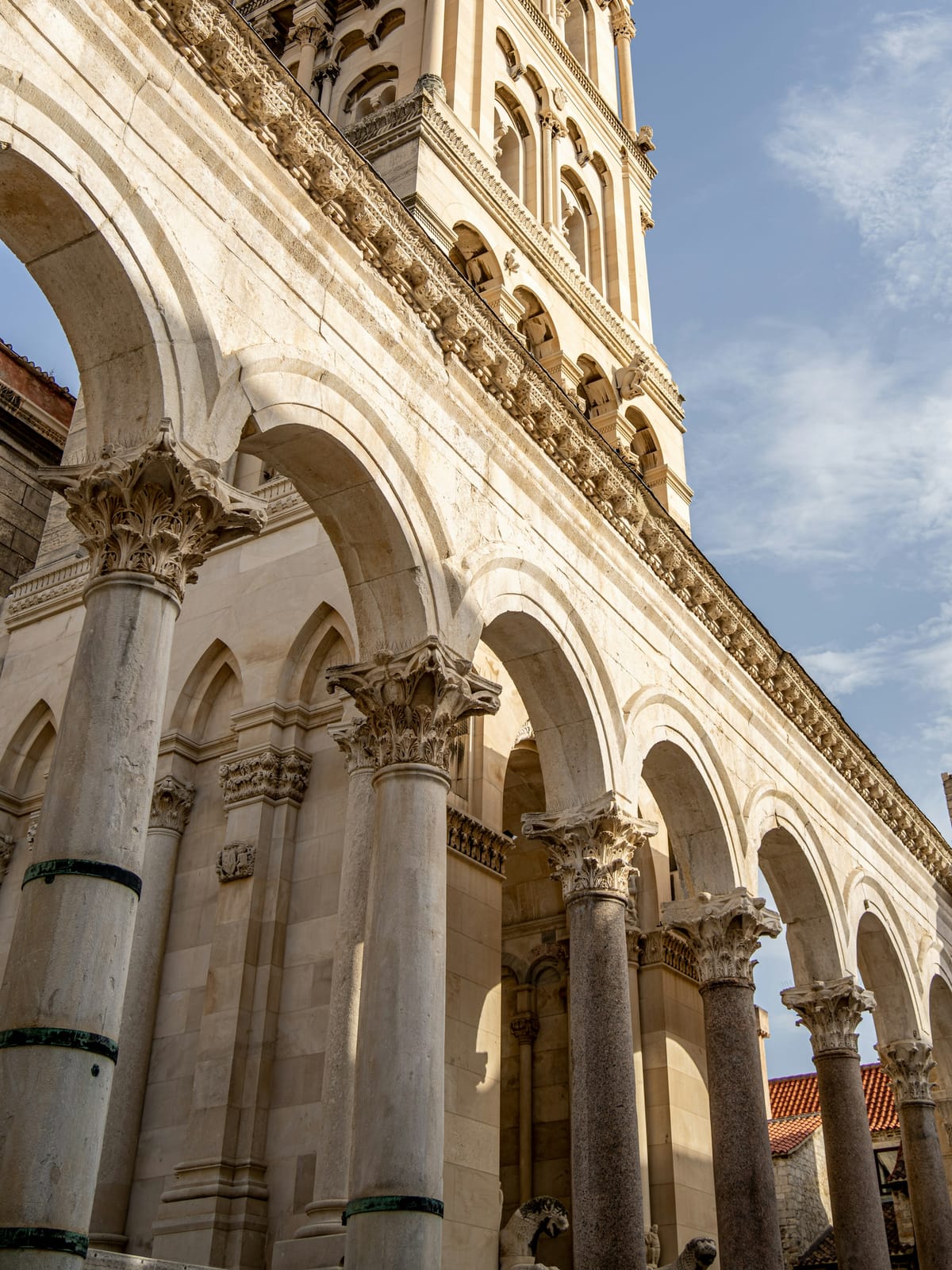
Split's Diocletian's Palace is 1,700 years old and has been continuously inhabited for the entirety of that time. The extraordinary character of the city is not that it is built near a Roman ruin — it is that the Roman ruin became the city, that people hung their washing between Roman columns and divided Roman halls into apartments and built churches inside Roman temples and have been doing so without interruption since the 4th century. Your private driver meets you at Split Airport. Your hotel is within the palace walls or immediately on the Riva promenade outside. The afternoon at leisure: the peristyle courtyard, the Golden Gate, the cathedral of St Domnius in Diocletian's mausoleum. Dinner in the old town.

  • Private airport transfer
  • Diocletian's Palace — the Roman city that never stopped
  • Cathedral of St Domnius in the imperial mausoleum
  • First evening on the Riva promenade
4–5★ hotel, Split old town or Riva
Day 2 — Split in Depth
Day 2
2

Day 2

Split in Depth

Fifteen years of archaeology explained in one morning.

Your private guide is an archaeologist who has been working the Split excavations for fifteen years and knows the relationship between the Roman structure and the medieval city that grew inside it in a way that a conventional guide cannot. The morning is the full palace circuit: the cardo and decumanus streets following the Roman grid, the basement halls beneath the peristyle that were used as a medieval dump for centuries and are now the best evidence of the palace's original function, the Golden Gate leading to the Meštrović Gallery in the sculptor's former studio. By noon you are in Trogir — a UNESCO World Heritage City thirty minutes north of Split — where the entire town occupies a small island connected to the mainland by a bridge and has done so since the 3rd century BC. The Cathedral of St Lawrence contains the Radovan Portal, carved in 1240 and considered the masterpiece of Croatian Romanesque-Gothic sculpture. Lunch overlooking the cathedral square. The afternoon yours in Split.

  • Diocletian's Palace basement halls with archaeologist guide
  • Trogir UNESCO World Heritage City — Radovan Portal 1240
  • Cathedral of St Lawrence — the finest Romanesque portal on the Adriatic
  • Meštrović Gallery in the sculptor's former studio
Meals: Breakfast 4–5★ hotel, Split
Day 3 — Hvar: Island Day
Day 3
3

Day 3

Hvar: Island Day

The sunniest island in Croatia, en route south.

The private boat from Split reaches Hvar Town in an hour, and Hvar announces itself with the smell of lavender from the interior plateau. Hvar Town's central square is the largest in Dalmatia — framed by the Venetian loggia, the clock tower, and the arsenal whose upper floor was converted to a theatre in 1612, making it the oldest public theatre in southeastern Europe. The morning in Hvar Town, then a drive through the island interior to the Stari Grad Plain: the UNESCO-listed Greek agricultural landscape established in 384 BC, its field boundaries unchanged for 2,400 years. The Spanish fortress above Hvar Town looks down over the entire island. The afternoon at the Pakleni Islands — a small archipelago of pine-forested islets off the harbour, with water that shifts from pale green to deep cobalt as the depth increases. Fast catamaran to Korčula in the evening.

  • Private boat Split to Hvar
  • Hvar's Venetian square and the 1612 theatre
  • Stari Grad Plain UNESCO landscape
  • Pakleni Islands private swimming and evening transfer to Korčula
Meals: Breakfast 4★ hotel, Korčula Town
Day 4 — Korčula: The Herringbone City
Day 4
4

Day 4

Korčula: The Herringbone City

The urban plan that Venetians designed to defeat the wind.

Korčula Town is built on a narrow wooded peninsula on the north coast of its island, and its street plan is a herringbone of lanes angled off a central spine — a Venetian design intended to funnel the bura wind away from the buildings. It has changed almost nothing since the 15th century. Your private guide is a Korčula native who grew up in the old town and knows its history from both sides: the architectural logic of the medieval plan, the carved family crests above doorways that record the town's merchant genealogy, the Gothic cathedral of St Mark at the centre with its carved ciborium above the high altar. The house where Marco Polo may or may not have been born in 1254 — the debate has been running for seven centuries, and your guide explains both sides with appropriate impartiality. The afternoon at leisure: the Bishop's Treasury, the town fortifications, the boats in the harbour. Dinner at a restaurant on the old town walls.

  • Korčula old town with island-born guide
  • The herringbone street plan — medieval urban design explained
  • Cathedral of St Mark and the Bishop's Treasury
  • Marco Polo's birthplace — both sides of the argument
Meals: Breakfast 4★ hotel, Korčula Town
Day 5 — Pelješac: Wine and Oysters
Day 5
5

Day 5

Pelješac: Wine and Oysters

The peninsula across the channel, with Croatia's best red wine and its best oysters.

The Pelješac Peninsula is ten minutes from Korčula by ferry and produces two of Croatia's most important wines: Dingač and Postup, both from Plavac Mali grown on steep south-facing slopes directly above the sea. The combination of reflected sunlight from the water below and the heat stored in the limestone gives the grapes a concentration found nowhere else in Croatia. Your morning begins at a private estate on the Dingač slopes: a vineyard walk with the winemaker, who explains the extreme viticulture required on gradients that sometimes exceed 45 degrees, and a tasting of current and library vintages in the cellar. Then to Ston, at the base of the peninsula: a town whose double medieval walls — the second longest in Europe after the Great Wall of China — enclosed the salt pans that were the basis of the Ragusan Republic's commercial power. Mali Ston oysters for lunch, pulled from the same channel the Romans fished. Return to Korčula for the afternoon.

  • Dingač private wine estate — Croatia's finest Plavac Mali
  • Ston medieval double walls — second longest in Europe
  • Mali Ston oysters fresh from the channel
  • Pelješac Peninsula vineyard walk above the sea
Meals: Breakfast 4★ hotel, Korčula Town
Day 6 — Arrival in Dubrovnik
Day 6
6

Day 6

Arrival in Dubrovnik

The approach from the sea and the first morning in the city.

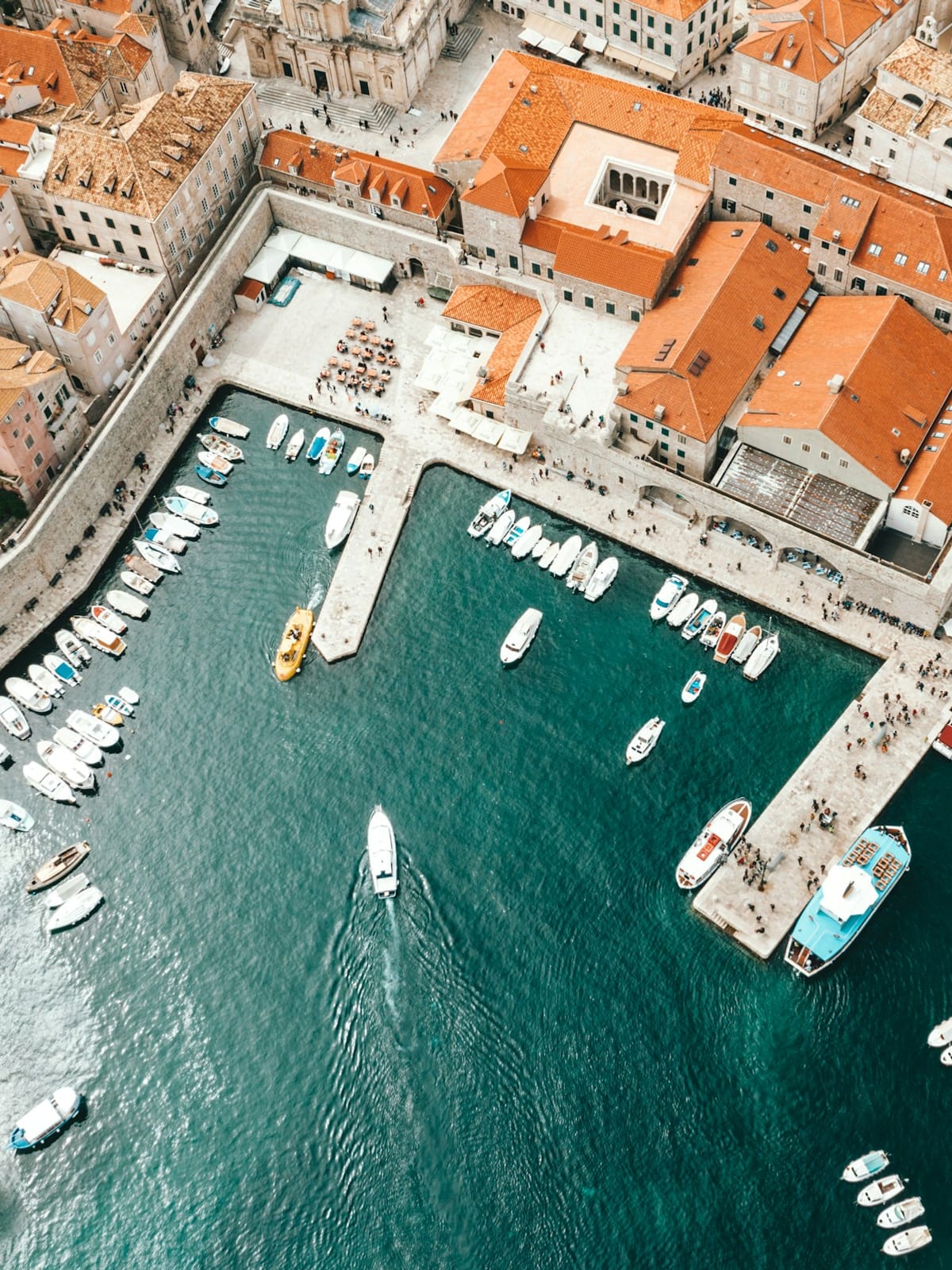
The fast catamaran from Korčula to Dubrovnik takes ninety minutes along the coast. The arrival in Dubrovnik by sea is the correct introduction to the city: the walls rising straight from the water, the Lovrijenac fortress on the rocks to the left, the harbour entrance, and behind it the towers and rooflines of the most intact medieval city in the Mediterranean. Your hotel is in the old town or on the Lapad peninsula. The afternoon with your private guide: the city walls circuit before the late afternoon crowds. Two kilometres above the old town on the mediaeval ramparts, with the tiled roofs below and the Adriatic horizon beyond. The Stradun at sunset, the Dominican monastery, Fort Lovrijenac reflected in the sea. Dinner in the old town.

  • Catamaran arrival — the walls rising from the Adriatic
  • City walls circuit with private guide
  • Dominican monastery and Fort Lovrijenac
  • The Stradun at sunset
Meals: Breakfast 5★ hotel, Dubrovnik
Day 7 — Dubrovnik: The City in Depth
Day 7
7

Day 7

Dubrovnik: The City in Depth

The republic that survived 450 years by being too valuable to destroy.

Dubrovnik's extraordinary preservation is the result of the Ragusan Republic's commercial success and its political intelligence — the city invested its profits in the finest architecture on the Adriatic and maintained its independence from Venice and the Ottomans by being useful to both. The result is a city whose main monuments survive intact from the 15th and 16th centuries. Your guide spends the morning on the monuments the standard tour misses: the Sponza Palace, whose Gothic-Renaissance loggia housed the Ragusan mint and customs house; the Rupe granary, where the Republic stored two years' worth of grain against sieges; the Rector's Palace with its Gothic atrium and the Republic's administrative offices. The afternoon at leisure: the cable car to Mount Srđ at 412 metres, from whose summit the entire old city is visible at once; the Buža bar built into a gap in the walls above the sea; Lokrum island by ferry for swimming.

  • Sponza Palace, Rector's Palace, Rupe granary — the republic in detail
  • Mount Srđ cable car — Dubrovnik from above
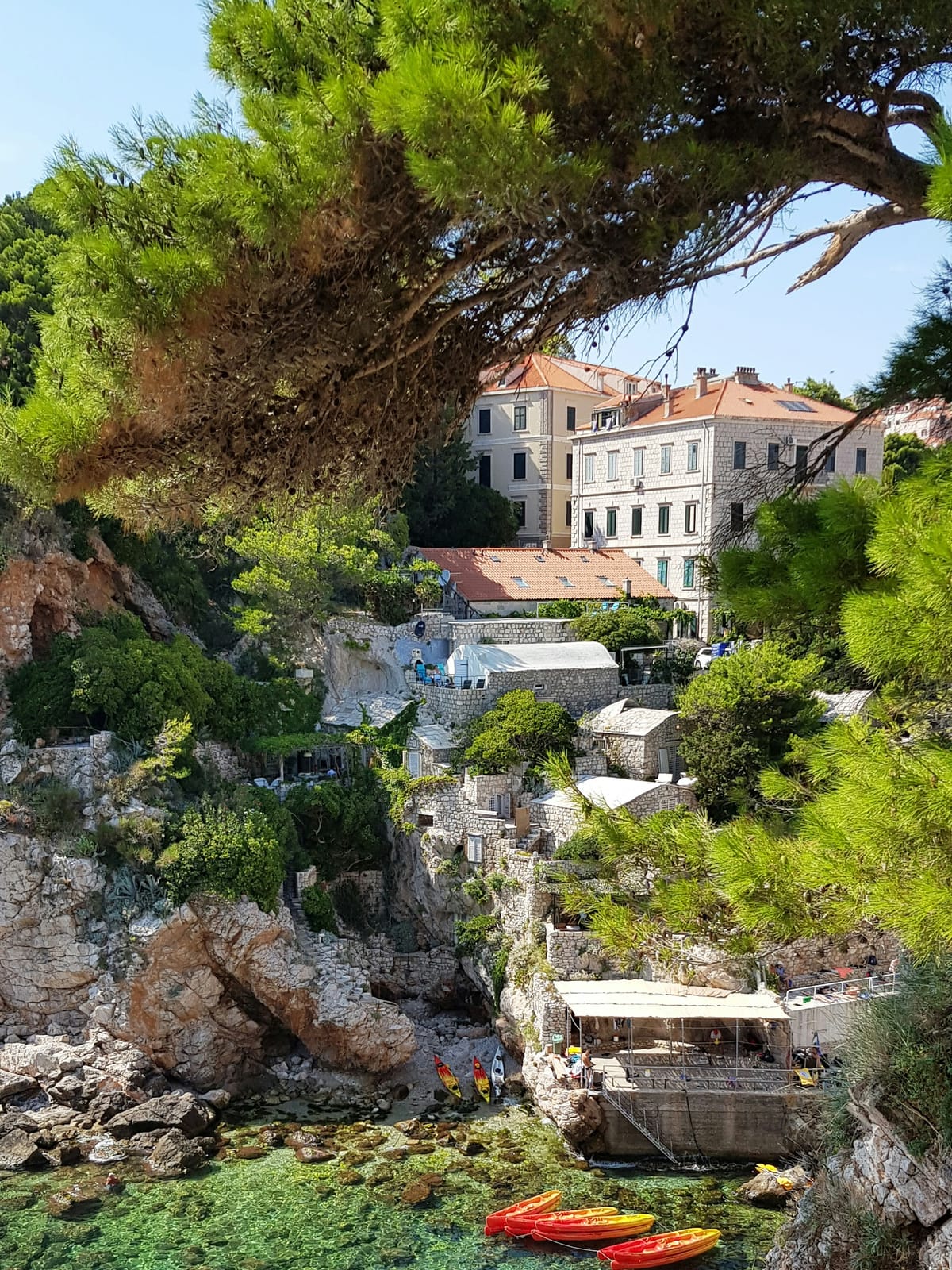
  • Buža bar in the medieval walls above the sea
  • Optional: Lokrum island ferry
Meals: Breakfast 5★ hotel, Dubrovnik
Day 8 — Departure
Day 8
8

Day 8

Departure

The walls from the sea road — the right last image.

The last morning in Dubrovnik belongs to those who stayed the night: the Stradun before the cruise ships, the Gundulić Square market, the coffee at a bar in one of the alleys behind the cathedral. Fort Imperial at the top of Mount Srđ — if the cable car fits the morning schedule — provides the city's full geometry in one last view. Your private driver transfers you to Dubrovnik Airport at the agreed time. The view of the walls from the sea road on the way out tends to produce an immediate wish to plan the return.

  • Dubrovnik old town before the day begins
  • Gundulić Square market and morning coffee
  • Optional final cable car for the farewell view
  • Private transfer to Dubrovnik Airport
Meals: Breakfast

Where You'll Stay

Hand-picked hotels, every night.

We choose properties for character, location, and the kind of service that makes you feel looked after — not just checked in. Every hotel can be swapped for an alternative if you prefer.

4–5★ hotel, Split

Split

2 nights

4–5★ hotel

Old town or Riva promenade

Inside or adjacent to the Diocletian's Palace walls

4★ hotel, Korčula

Korčula

3 nights

4★ hotel

Near old town

Three nights allows unhurried time in Korčula, Hvar, and Pelješac

5★ hotel, Dubrovnik

Dubrovnik

2 nights

5★ hotel

Old town or Lapad peninsula

Old town hotels for atmosphere; Lapad for pool and sea access

Hotels shown are indicative of the standard we book. Upon request, we will provide a detailed itinerary with specific hotel options tailored to your preferences and budget.

What's in the Price

Included

  • 7 nights in 4–5★ hotels
  • Daily breakfast at each hotel
  • Private airport transfer in Split
  • Private boat Split–Hvar
  • Fast catamaran Hvar–Korčula
  • Fast catamaran Korčula–Dubrovnik
  • Split private archaeologist guide
  • Trogir UNESCO city visit with guide
  • Korčula private guide (island-born)
  • Dubrovnik private guide and city walls circuit
  • Dingač private wine estate tasting
  • Stari Grad Plain visit on Hvar
  • Pakleni Islands boat excursion
  • All entrance fees for guided visits
  • 24/7 travel specialist support
  • Hamilton & Chase digital travel booklet

Not Included

  • International flights to Split / from Dubrovnik
  • Travel insurance (required — we can arrange on request)
  • Meals not listed
  • Personal expenses
  • Gratuities for guides and drivers
  • City tax (collected by hotels)

Good to Know

  • This itinerary is focused on architecture and history — guests who want more beach time should consider the Dalmatian Islands itinerary, which includes Vis and has more days on the water.
  • The Dingač wine estate visit is weather-dependent in the sense that the vineyard walk on steep slopes can be slippery after rain — your guide will adapt accordingly.
  • Dubrovnik is very busy in July and August; late May, September, and October offer the same monuments with significantly fewer visitors.
  • The Korčula option works equally well as an extension of the Dalmatian Islands itinerary if you want both Vis and more time in the walled cities.

Make It Yours

Optional add-ons & upgrades.

Every trip is different. These extras can be woven into your itinerary — just let your travel specialist know what catches your eye.

Vis Island day trip from Korčula

A day on Croatia's most unspoiled island — closed to foreigners until 1989, its Blue Cave and Stiniva Cove are the most visited features, but the Vugava wine tasting at a family estate is the reason food and wine travellers come

From €130 pp

Mljet National Park

The island of Mljet by private boat from Dubrovnik — half national park, with saltwater lakes, a 12th-century Benedictine monastery on an island within the inner lake, and a completely unhurried pace

From €130 pp

Moreška sword dance performance

Korčula's traditional sword dance — performed weekly in high season by the Moreška performing society, whose 16th-century tradition is the living cultural heritage of the island

From €45 pp

Fort Imperial siege museum, Dubrovnik

The Napoleonic fort at the summit of Mount Srđ converted to a museum of the 1991–92 siege — a reminder that this perfect-seeming medieval city was under bombardment for eight months and has been comprehensively restored since

From €35 pp

"We thought we understood Dubrovnik before we arrived. The guide spent a full morning showing us the parts of the city that the standard tour completely ignores — the granary, the Sponza Palace mint, the actual administrative machinery of a 450-year republic. The Radovan Portal in Trogir was something we had never heard of and won't forget. Four walled cities, each completely different."

Robert & Anne-Marie C.

Paris, France · Walled Cities of Croatia, June 2025

Common Questions

Questions about this trip.

How do Split and Dubrovnik differ as medieval cities?

Fundamentally. Split's walls are Roman (305 AD) and the medieval town grew inside them — so you are in a Roman enclosure whose every building is medieval or later. Dubrovnik's walls are medieval (primarily 15th century) and the buildings within them are mostly Baroque, rebuilt after the 1667 earthquake. Split is older and stranger; Dubrovnik is more complete and more immediately beautiful. Both repay serious attention.

Why three nights in Korčula rather than more time in Split or Dubrovnik?

Korčula is a base for both the island itself and for the Pelješac excursion — the Dingač wine tasting, Ston's walls, and the oysters at Mali Ston make a full day. Three nights gives two full days of activity plus time to simply be in the old town in the evening, which is when Korčula is at its best.

Private Package Journey

Walled Cities of Croatia

8 days / 7 nights

From €3,190

per person

Ready to go?

Share a few details and a specialist will reply within one business day.

More Croatia Tours

Prefer to Talk?

Available Mon–Fri 9am–6pm CET.
On-trip support is 24/7.

Plan My Trip