Hamilton & Chase Tours
Essence of Sweden — Private Package 7-day Scandinavia tour: Stockholm, the Vasa Museum, Drottningholm, Dalarna, and Gothenburg.

7-Day Private Package Journey

Essence of Sweden

Stockholm, the Vasa Museum, Drottningholm, Dalarna, and Gothenburg.

Available as Private Semi-Private Self-Guided
From €2,990 per person 7 days / 6 nights
View Itinerary

Tour Overview

7 days across Scandinavia.

Sweden is a country of 450,000 lakes, 270,000 islands, and three distinct landscapes within a four-hour drive of each other. Stockholm is the most beautiful capital in Scandinavia — a city built across fourteen islands where Lake Mälaren meets the Baltic Sea, whose Gamla Stan (Old Town) is the most intact medieval city in northern Europe, and whose Vasa Museum contains the only complete 17th-century warship in the world. The Dalarna region is the cultural heartland of Sweden: the red-painted timber farmhouses, the midsummer celebrations around the maypole, the Dala horse that is Sweden's most recognisable souvenir, and the Falun copper mine whose revenues built the Swedish empire. Gothenburg is Sweden's second city and its maritime gateway — a canal city of Dutch character whose Feskekörka (Fish Church) fish market and Liseberg amusement park (the most visited in Scandinavia) define its character as clearly as anything in Stockholm. This seven-day private journey connects the essential Swedish experiences: the capital, the cultural heartland, and the west-coast city of seafood and Scandinavian design.

Detailed Itinerary

Your journey, day by day.

Every day is designed with breathing room. Sleep in, take a detour, linger at lunch — the itinerary flexes around you, not the other way around.

Day 1 — Arrival in Stockholm
Day 1
1

Day 1

Arrival in Stockholm

The city on fourteen islands.

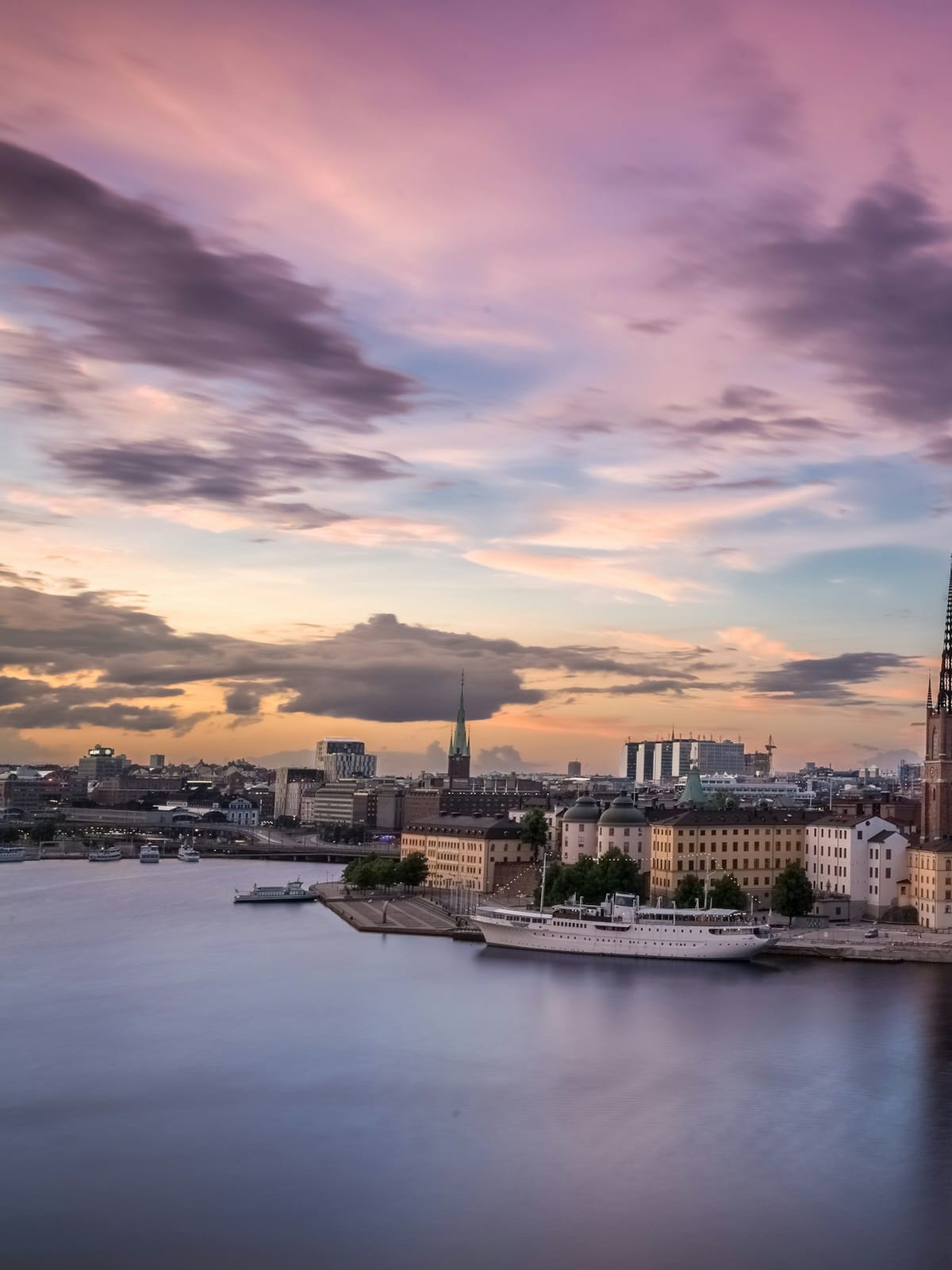
Stockholm is built across fourteen islands at the point where Lake Mälaren empties into the Baltic Sea — a geographical accident that produced a city of exceptional visual quality, whose water channels and island silhouettes make it unlike any other capital in the world. Your private driver meets you at Stockholm Arlanda Airport. Gamla Stan in the afternoon: the Old Town on Stadsholmen island whose medieval street plan, the Stortorget square (site of the Stockholm Bloodbath of 1520), the Royal Palace, and the Nobel Museum are all within ten minutes' walking distance of each other. Welcome dinner in Gamla Stan or on Södermalm — the hip southern island whose food culture has been transforming Stockholm's restaurant scene since the early 2000s.

  • Private airport transfer to Stockholm
  • Gamla Stan — the medieval island and the Stortorget
  • Royal Palace — the official residence of the Swedish monarch
  • Welcome dinner in Stockholm
4–5★ hotel, Stockholm city centre
Day 2 — Stockholm — The Vasa and Djurgården
Day 2
2

Day 2

Stockholm — The Vasa and Djurgården

The only surviving 17th-century warship and the museum island.

The Vasa Museum on Djurgården island houses the warship Vasa — the most complete 17th-century ship in the world. Vasa was built for King Gustav II Adolf between 1626 and 1628, sank on her maiden voyage in Stockholm harbour after sailing 1,300 metres, and was raised in 1961 after 333 years on the seabed. The preservation is extraordinary: 98% of the original ship, 700 sculptures carved in oak, and the 24 bronze cannons that were the most powerful armament of the age. The Nordiska Museet (Nordic Museum) adjacent: the comprehensive collection of Scandinavian folk art, design, and domestic history from the 16th century to the contemporary. The ABBA Museum on Djurgården: the exhibition that documents Sweden's most successful cultural export — the music, the costumes, and the phenomenon of ABBA's continued relevance five decades after their peak. Skansen, the world's oldest open-air museum (1891): 150 buildings relocated from across Sweden to form a living museum of Swedish rural life.

  • Vasa Museum — the only complete 17th-century warship in the world
  • ABBA Museum — Sweden's most successful cultural export
  • Skansen open-air museum — 150 historic buildings from across Sweden
  • Djurgården island by foot or bicycle
Meals: Breakfast 4–5★ hotel, Stockholm
Day 3 — Stockholm — Drottningholm and the City
Day 3
3

Day 3

Stockholm — Drottningholm and the City

The royal palace on Lake Mälaren and the design capital.

Drottningholm Palace on Lake Mälaren: the UNESCO World Heritage royal palace that has been the permanent residence of the Swedish royal family since 1981 — the court theatre (1766, still in use for 18th-century opera productions in summer), the Chinese Pavilion (1769), and the baroque gardens whose formal axes are the finest in Scandinavia. The boat from Stockholm to Drottningholm (50 minutes) is the correct approach — the lake gives the palace its setting. Stockholm's design district in the afternoon: the Östermalm neighbourhood and the Nordic Light Hotel, the Design House Stockholm flagship on Hamngatan, and the Fotografiska photography museum on the Södermalm waterfront — the world's largest photography museum, whose temporary exhibitions have included the most important bodies of photographic work of the past three decades.

  • Drottningholm Palace — UNESCO royal residence on Lake Mälaren
  • Drottningholm Court Theatre — 1766, 18th-century opera in summer
  • Fotografiska — the world's largest photography museum
  • Stockholm design district — Östermalm and Hamngatan
Meals: Breakfast 4–5★ hotel, Stockholm
Day 4 — Uppsala and Dalarna
Day 4
4

Day 4

Uppsala and Dalarna

Scandinavia's oldest university and the cultural heartland of Sweden.

Uppsala is Sweden's fourth-largest city and home to Scandinavia's oldest university (1477) — whose Anatomical Theatre (1662), the first in Scandinavia, performed public dissections as educational events. Uppsala Cathedral is the largest church in Scandinavia: the burial place of King Gustav Vasa, Archbishop Nathan Söderblom (Nobel Peace Prize 1930), and the botanist Carl Linnaeus, whose system of biological classification organises all of science. Gamla Uppsala three kilometres north: the three great burial mounds (500–600 AD) of the Svear kings who were the predecessors of the Swedish monarchy. The drive northwest into Dalarna — the province of red farmhouses, birch forests, and Lake Siljan, whose circular basin was formed by a meteorite impact 377 million years ago. Rättvik on the lake shore: the midsummer capital of Sweden, where the traditional celebrations are the most attended and the most authentic.

  • Uppsala Cathedral — the largest church in Scandinavia
  • Uppsala University — Scandinavia's oldest, founded 1477
  • Gamla Uppsala burial mounds — the 6th-century Svear kings
  • Lake Siljan — the meteorite impact crater of Dalarna
Meals: Breakfast 4★ hotel, Dalarna
Day 5 — Dalarna — Falun and the Dala Horse
Day 5
5

Day 5

Dalarna — Falun and the Dala Horse

The copper mine that funded the Swedish empire and the souvenir that represents it.

Falun's copper mine, operating continuously from the 10th century to 1992, was the single most important source of Swedish wealth during the Great Power period (1611–1718) — providing the copper that was used as currency, cannon, and roofing across Europe. The UNESCO World Heritage mine and its surrounding industrial landscape are the best-preserved example of early modern industrial infrastructure in Scandinavia. The Great Pit (Stora Stöten): the mine's central excavation that collapsed in 1687, forming a crater 100 metres deep and 350 metres wide — a landscape of red and yellow oxide deposits that looks both geological and architectural. The Dala horse: the painted wooden horse from Dalarna that has been the symbol of Sweden since the 1939 New York World's Fair. The workshops in Nusnäs where the horses are still painted by hand using the same techniques and the same kurbits floral patterns as the 18th-century originals. Drive to Gothenburg via the E20.

  • Falun Copper Mine UNESCO — the mine that funded the Swedish empire
  • Stora Stöten — the 1687 collapse crater of red and yellow oxides
  • Nusnäs Dala horse workshops — the painters who work by hand
  • Drive through the Swedish forest interior to Gothenburg
Meals: Breakfast 4–5★ hotel, Gothenburg
Day 6 — Gothenburg
Day 6
6

Day 6

Gothenburg

The canal city of seafood and Scandinavian design.

Gothenburg is Sweden's second city and the country's primary port — a canal city of Dutch character (the canals and street grid were laid out by Dutch engineers in the 17th century) whose central moat and the Avenyn boulevard give it a structure quite different from Stockholm. The Feskekörka (Fish Church): the 1874 fish market building on the Rosenlund canal whose name derives from its ecclesiastical profile — the most important daily fish market in Scandinavia, where the shrimp, mussels, and Norwegian lobster of the Bohuslän coast are sold by the families who caught them. The Gothenburg Museum of Art on Götaplatsen: the finest collection of Nordic art outside Stockholm, with a Rembrandt room and the most important collection of Scandinavian Impressionism in public ownership. Liseberg amusement park: the most visited theme park in Scandinavia, founded in 1923, whose Helix roller coaster is rated among the ten best in Europe. Dinner in Gothenburg's Haga district — the 19th-century working-class neighbourhood of wooden houses now known for its cafés and the Swedish cinnamon bun that Gothenburg claims to have perfected.

  • Feskekörka Fish Church — the daily fish market of Bohuslän
  • Gothenburg Museum of Art — Nordic Impressionism and Rembrandt
  • Liseberg amusement park — the most visited in Scandinavia
  • Haga district — the cinnamon bun capital of Sweden
Meals: Breakfast 4–5★ hotel, Gothenburg
Day 7 — Departure from Gothenburg
Day 7
7

Day 7

Departure from Gothenburg

One last Swedish morning.

Gothenburg in the morning: the Saluhallen covered market on Kungstorget — the 1889 food hall whose produce represents the Bohuslän coast and Swedish culinary tradition; the Universeum science museum (optional, particularly for families); and the Swedish Maritime Museum documenting Gothenburg's four centuries as the country's primary trading port. Gothenburg Landvetter Airport is 30 minutes from the city centre. Alternatively, Stockholm Arlanda is three hours by high-speed train for guests connecting from there. Your private driver transfers you at the agreed time.

  • Saluhallen covered market — Swedish produce and Bohuslän seafood
  • Optional: Gothenburg archipelago boat trip
  • Private transfer to Gothenburg Airport
Meals: Breakfast

Where You'll Stay

Hand-picked hotels, every night.

We choose properties for character, location, and the kind of service that makes you feel looked after — not just checked in. Every hotel can be swapped for an alternative if you prefer.

4–5★ hotel, Stockholm

Stockholm

3 nights

4–5★ hotel

Gamla Stan or Södermalm

Three nights allows both Stockholm museum days and the Drottningholm day

4★ hotel, Dalarna

Dalarna

1 night

4★ hotel

Rättvik or Leksand, Lake Siljan

Lakeside location on Lake Siljan — the most characteristic Dalarna setting

4–5★ hotel, Gothenburg

Gothenburg

2 nights

4–5★ hotel

City centre or Haga

Two nights allows the full Gothenburg programme and a relaxed morning before departure

Hotels shown are indicative of the standard we book. Upon request, we will provide a detailed itinerary with specific hotel options tailored to your preferences and budget.

What's in the Price

Included

  • 6 nights in 4–5★ hotels and design hotels
  • Daily breakfast at each property
  • Private airport transfer at Stockholm
  • Private vehicle and driver throughout
  • Stockholm guided visits — Gamla Stan, Vasa Museum, Djurgården
  • Drottningholm Palace and court theatre guided visit
  • Fotografiska museum entry
  • Uppsala Cathedral and university guided visit
  • Gamla Uppsala burial mounds visit
  • Falun Copper Mine UNESCO guided visit
  • Nusnäs Dala horse workshop visit
  • Gothenburg guided visit — Feskekörka, Museum of Art, Haga
  • All entrance fees for guided visits
  • 24/7 travel specialist support
  • Hamilton & Chase digital travel booklet

Not Included

  • International flights to Stockholm / from Gothenburg
  • Travel insurance (required — we can arrange on request)
  • Meals not listed
  • Personal expenses
  • Gratuities for guides and drivers
  • City tax (collected by hotels)

Good to Know

  • Sweden uses the Swedish krona (SEK) — credit cards are accepted everywhere and cash is rarely necessary in Swedish cities.
  • Stockholm in June has nearly 18 hours of daylight — the long evenings are one of the great pleasures of a summer visit.
  • Dalarna Midsummer (third Friday in June) is the most celebrated regional event in Sweden — if your dates coincide, Hamilton & Chase will arrange access to a traditional farm celebration.
  • Liseberg amusement park is closed in winter — if visiting September to April, the park visit can be replaced with the Gothenburg archipelago boat tour.

Make It Yours

Optional add-ons & upgrades.

Every trip is different. These extras can be woven into your itinerary — just let your travel specialist know what catches your eye.

Midsummer celebration

A traditional Swedish Midsummer celebration at a farm in Dalarna — maypole raising, folk dancing in traditional costume, herring and new potatoes, and the schnapps that accompanies them. Available June only, around the summer solstice.

From €85 pp

Gothenburg archipelago boat trip

A half-day boat tour through the Bohuslän archipelago islands west of Gothenburg — the 8,000 islands, skerries, and lighthouses of the Swedish west coast, with seals and guillemots on the outer rocks.

From €65 pp

Swedish Food Academy private dining

A private dinner experience prepared by a chef from the Swedish Culinary Academy — the New Nordic cuisine that Sweden has been developing since Noma showed what Scandinavian ingredients could become.

From €165 pp

Åhus Absolut Vodka distillery

The Absolut Vodka distillery in Åhus, southern Sweden — the single distillery that produces all Absolut from winter wheat grown in the surrounding fields. Private tour and tasting. Can be added as a detour en route to Gothenburg.

From €65 pp

"The Vasa Museum was unlike anything I had expected from a ship museum. You stand next to a 1628 warship and realise that the paint is original, the carvings are original, the bronze cannons are original — and it sank on its maiden voyage 400 metres from the dock. Sweden explained in one object. Hamilton & Chase made seven days feel like the complete picture."

Hannah & Klaus B.

Hamburg, Germany · Essence of Sweden, August 2025

Common Questions

Questions about this trip.

Is Sweden very expensive?

Less so than Norway — Stockholm restaurant prices are comparable to Paris or Amsterdam. The main expense is accommodation, which Hamilton & Chase manages by selecting the best-value 4–5★ properties in each city. Gothenburg is noticeably less expensive than Stockholm for both hotels and restaurants.

What is the best time of year to visit Dalarna?

June for Midsummer (the biggest celebration of the year, centred on Rättvik and Leksand). August for warm lake swimming. September–October for the autumn colours in the birch forest around Lake Siljan. Winter (January–February) for cross-country skiing on the prepared tracks around the lake.

Private Package Journey

Essence of Sweden

7 days / 6 nights

From €2,990

per person

Ready to go?

Share a few details and a specialist will reply within one business day.

Prefer to Talk?

Available Mon–Fri 9am–6pm CET.
On-trip support is 24/7.

Plan My Trip