Hamilton & Chase Tours
Epic Croatia — Private Package 11-day Croatia tour: Zagreb to Dubrovnik — the complete journey through every Croatia.

11-Day Private Package Journey

Epic Croatia

Zagreb to Dubrovnik — the complete journey through every Croatia.

Available as Private Semi-Private Self-Guided
From €3,990 per person 11 days / 10 nights
View Itinerary

Tour Overview

11 days across Croatia.

Croatia is a country of extraordinary variety compressed into a relatively small geography. The capital is Central European in character — coffeehouse culture, Austro-Hungarian architecture, an excellent contemporary food scene. The interior has a UNESCO-listed waterfall landscape that looks like a natural laboratory for the colour turquoise. The northern Adriatic peninsula is Venetian in its architecture and Italian in its food. The central Dalmatian coast has a Roman imperial palace that became a city of 200,000 people. The southern archipelago contains islands that were closed to foreigners until 1989 and are the most unspoiled places on the coast. Dubrovnik is the best-preserved medieval city in the Mediterranean. This eleven-day private journey connects all of them in the sequence that makes the most sense, covering Croatia completely without ever feeling rushed.

Detailed Itinerary

Your journey, day by day.

Every day is designed with breathing room. Sleep in, take a detour, linger at lunch — the itinerary flexes around you, not the other way around.

Day 1 — Zagreb: The Continental Capital
Day 1
1

Day 1

Zagreb: The Continental Capital

The city that looks toward Vienna, not toward Venice.

Zagreb is the surprise that resets expectations about Croatia. Built on a limestone ridge above the Sava River during the Austro-Hungarian period, the city has coffeehouses, a Secessionist lower town, tram lines, and a culture that is unambiguously Central European. Your private driver meets you at the airport. The afternoon at leisure in the city: the Upper Town (Gornji Grad) above the funicular with its Baroque churches and the Croatian Parliament; the Dolac open-air market operating on its square since 1930; the Tkalčićeva pedestrian street where the café terraces have been the social infrastructure of Zagreb since the 19th century. Dinner at a restaurant that takes the Croatian-Central European table seriously: black risotto alongside Viennese-influenced štrukli, Plavac Mali alongside Riesling from the northern vineyards.

  • Private airport transfer
  • Zagreb Upper Town — the Austro-Hungarian city on the ridge
  • Dolac market and Tkalčićeva café culture
  • First-night dinner — the Central European-Croatian combination
4–5★ hotel, Zagreb centre
Day 2 — Zagreb: The Museum City
Day 2
2

Day 2

Zagreb: The Museum City

More interesting museums per capita than almost anywhere in Europe.

Zagreb has a museum culture that is out of proportion to its size. The Museum of Broken Relationships — a permanent collection of objects donated by individuals after the end of a love affair, each accompanied by a handwritten description of its significance — has been exhibited in forty countries, and the Zagreb original is the one to see. The Mimara Museum holds one of the great Central European private art collections: Raphael, Rubens, Velázquez, and a sculpture collection that would be celebrated in any major city. The Archaeological Museum's prehistoric and Greek collection covers the territory that is now Croatia from the Bronze Age through the Roman period. Your private guide — a Zagreb art historian — helps you choose the combination that fits your interests. The city walks between museums — the Austro-Hungarian boulevards, the Secessionist facades, the Green Horseshoe parks of the Lower Town — are the connective tissue of a coherent city. Transfer south to Plitvice in the late afternoon.

  • Museum of Broken Relationships — the original permanent collection
  • Mimara Museum with art historian guide
  • Zagreb Lower Town and the Green Horseshoe
  • Transfer south to Plitvice
Meals: Breakfast Hotel near Plitvice Lakes
Day 3 — Plitvice Lakes
Day 3
3

Day 3

Plitvice Lakes

UNESCO turquoise in sixteen connected lakes and ninety-two waterfalls.

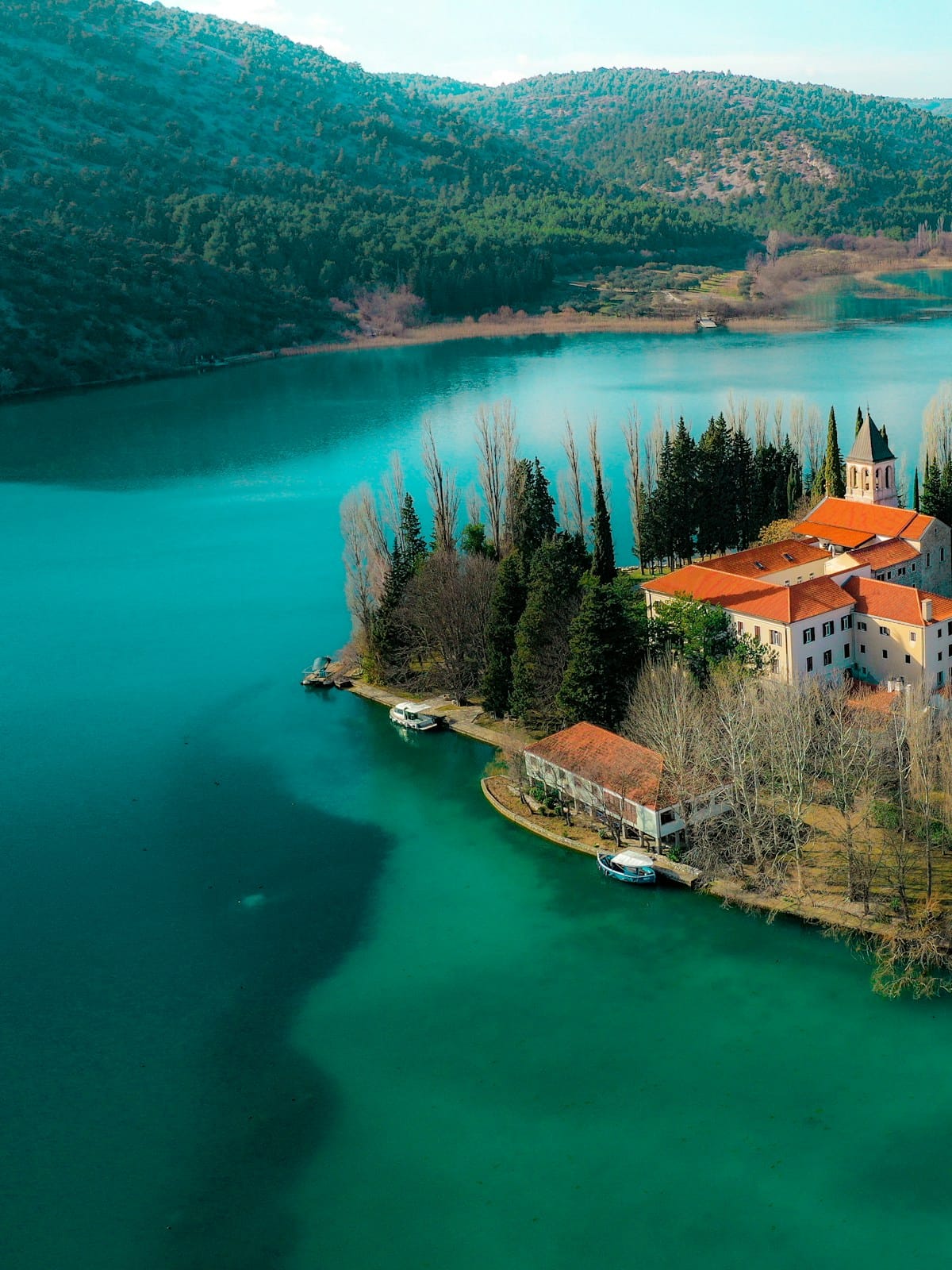
Plitvice Lakes National Park has been UNESCO World Heritage listed since 1979 — a system of sixteen terraced lakes connected by waterfalls, boardwalks, and boat crossings in a limestone Karst landscape where the deposited travertine builds the barriers that create the falls and is still building them now. The colour of the water — the result of minerals, algae, and light — shifts from cobalt blue in the depths to emerald green in the shallows to white foam in the falls, and changes through the day and the season. Your private guide meets you at the park for the early morning circuit: the boardwalks over the lower lakes, the Veliki Slap waterfall at 78 metres (Croatia's tallest), and the electric boat across the main lake. The morning is the right time — the park receives a million visitors per year, and by eleven the tour groups have arrived. Afternoon at leisure in the park; transfer west to the coast in the late afternoon.

  • Plitvice early morning circuit — before the tour groups
  • Veliki Slap — Croatia's tallest waterfall at 78 metres
  • Boardwalk and boat through the lower and upper lakes
  • Transfer to the Dalmatian coast
Meals: Breakfast 4★ hotel, Zadar old town
Day 4 — Zadar and the Road South
Day 4
4

Day 4

Zadar and the Road South

The oldest city in Croatia, overlooked and extraordinary.

Zadar has been continuously inhabited for over three thousand years and receives a fraction of the visitors of Split or Dubrovnik. The Roman forum is still the main public square — 2,000 years after it was built, the columns and the altar base are the focal point of daily life. The Church of St Donatus, a 9th-century pre-Romanesque rotunda built partly from Roman forum stones, is the most distinctive building in Croatia. Alfred Hitchcock climbed the Cathedral of St Anastasia's bell tower in 1964 and told a journalist that the sunset over the Zadar archipelago was the best in the world. The afternoon drive south towards Split passes through Šibenik — whose Cathedral of St James is the first entirely stone-vaulted Gothic-Renaissance building in the world, built without conventional arching, UNESCO-listed — and the entrance to Krka National Park. A boat trip up the Krka River to the Skradinski Buk waterfall terraces, swimming at the base, and arrival in Split in the evening.

  • Zadar Roman Forum — the 2,000-year public square
  • Church of St Donatus and Hitchcock's sunset
  • Šibenik Cathedral of St James — UNESCO structural innovation
  • Krka National Park waterfalls and swimming
Meals: Breakfast 4–5★ hotel, Split old town or Riva
Day 5 — Split: Diocletian's City
Day 5
5

Day 5

Split: Diocletian's City

The Roman palace that never stopped being lived in.

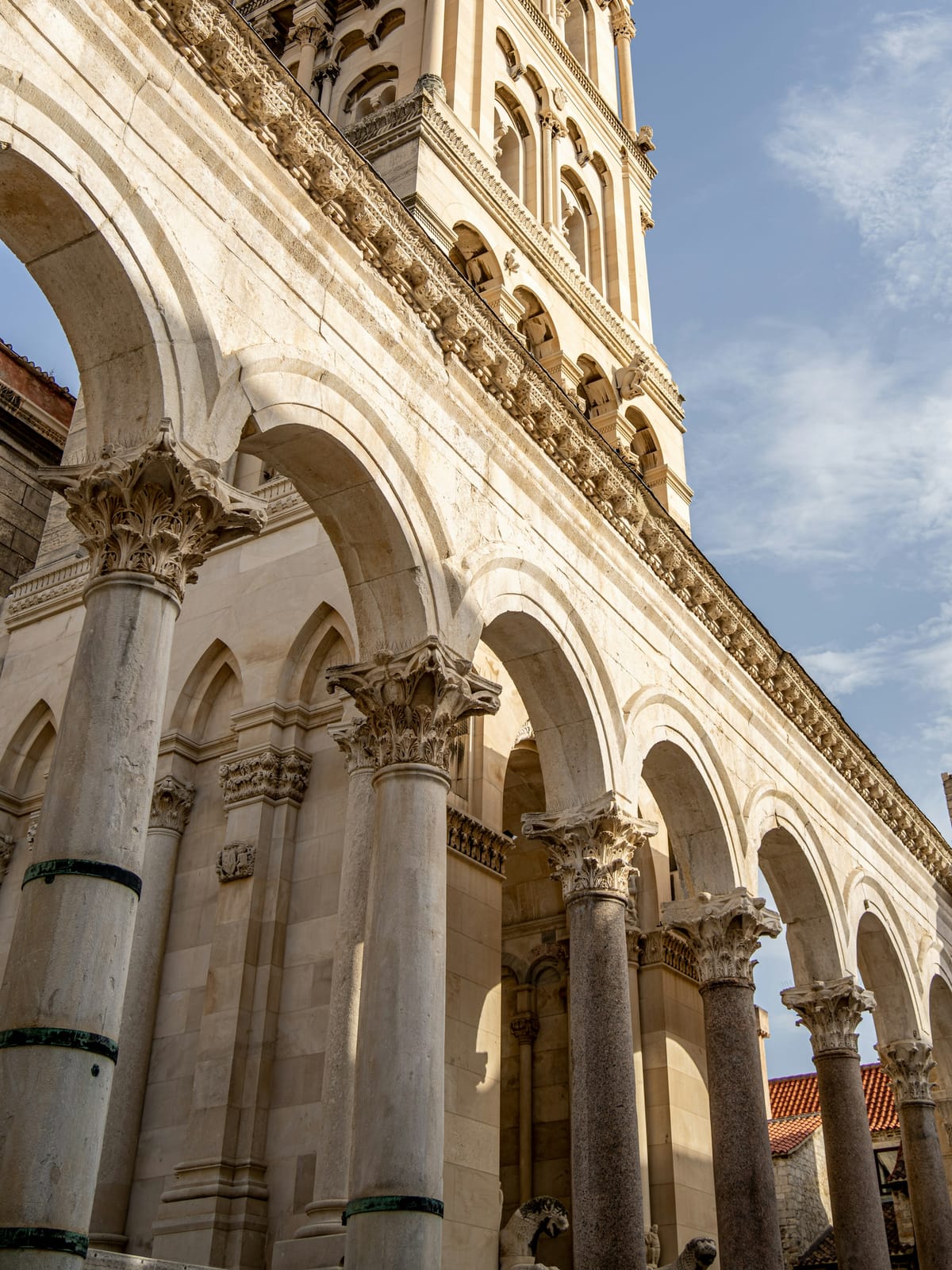
Split's defining characteristic is the relationship between the Roman structure and the living city — not a ruin preserved behind barriers, but an inhabited enclosure where apartments occupy Roman halls, restaurants occupy Roman basements, and the cathedral was installed in the emperor's own mausoleum in the 7th century and has been in continuous use since. Your private guide is an archaeologist who has worked the Split excavations for fifteen years. The full palace circuit: the cardo and decumanus streets of the Roman grid; the basement halls beneath the peristyle, which are the best surviving evidence of the original palace layout; the cathedral of St Domnius; the Golden Gate leading to the medieval Meštrović Gallery. Trogir in the afternoon — thirty minutes north, a UNESCO World Heritage City on a tiny island, whose Cathedral of St Lawrence contains the Radovan Portal of 1240, considered the masterpiece of medieval Croatian sculpture. Return to Split. Dinner on the Riva.

  • Diocletian's Palace with archaeologist guide
  • Cathedral of St Domnius in the imperial mausoleum
  • Trogir — Radovan Portal 1240, the finest Romanesque carving on the Adriatic
  • Split Riva at sunset
Meals: Breakfast 4–5★ hotel, Split
Day 6 — Hvar: Light, Lavender, and the Greek Plain
Day 6
6

Day 6

Hvar: Light, Lavender, and the Greek Plain

The sunniest island in Croatia, with an agricultural legacy 2,400 years old.

Private boat from Split to Hvar Town — an hour on calm water, with the islands of Brač and Šolta off the port side. Hvar Town's central square is the largest in Dalmatia: the Venetian loggia, clock tower, and the arsenal that was converted to a theatre in 1612 (the oldest public theatre in southeastern Europe, predating comparable institutions in Vienna and Budapest). The morning in Hvar Town, then a drive through the lavender interior to the Stari Grad Plain. The Greek agricultural landscape established in 384 BC has field boundaries, roads, and irrigation channels unchanged after 2,400 years — UNESCO recognised it in 2008 as one of the best-preserved examples of ancient rural organization in the world. The afternoon for the Pakleni Islands — a small archipelago of pine-forested islets off the harbour, by private boat, for swimming in the clearest water on the Dalmatian coast.

  • Private boat Split to Hvar
  • Hvar Venetian square and the 1612 theatre
  • Stari Grad Plain UNESCO landscape — 2,400 years unchanged
  • Pakleni Islands private boat and swimming
Meals: Breakfast 4–5★ hotel, Hvar Town
Day 7 — Vis: The Island the Military Kept Secret
Day 7
7

Day 7

Vis: The Island the Military Kept Secret

Closed to foreigners until 1989 and the most authentic place on the coast.

Vis is forty minutes from Hvar by fast boat and is unlike any other island on the Dalmatian coast. Designated a Yugoslav Navy base from the 1950s, it was closed to all foreign visitors until 1989 and consequently skipped the development cycle that shaped Hvar and Korčula. The result: no large hotels, no cruise infrastructure, an interior of terraced vineyards and dry-stone walls that operates at its own pace. Vis Town's double harbour is framed by Austrian naval barracks on one side and Venetian summer palaces on the other. The afternoon is the Blue Cave on the islet of Biševo — twenty minutes by small boat, where the morning light enters through an underwater opening and fills the cave interior with electric cobalt light. Dinner at a konoba whose kitchen works with what the island produces: lamb from the interior terraces, Vugava white wine made from a grape grown only on Vis.

  • Private boat Hvar to Vis
  • Vis Town double harbour — Austrian and Venetian
  • Blue Cave on Biševo — cobalt light through underwater refraction
  • Konoba dinner with island-grown Vugava wine
Meals: Breakfast Boutique hotel, Vis Town
Day 8 — Vis: Stiniva and the Vugava Vineyards
Day 8
8

Day 8

Vis: Stiniva and the Vugava Vineyards

The cove, the wine, and the island as it actually is.

Stiniva Cove is accessible only by boat — a pebble beach enclosed between two limestone cliffs that nearly meet overhead, with water so clear the bottom is visible at eight metres depth. Named Europe's best beach in 2016. A private boat from Vis Town reaches it in twenty minutes and drops you for the morning: swimming in the enclosed cove, the rock shade, the silence of a place that empties by mid-afternoon when the tourist boats leave. The afternoon is for the Vugava vineyard in the island interior: a family that has been growing on the same terraces for generations, whose wine is not exported and must be tasted here. The vineyard walk, the dry-stone wall landscape, the scent of the scrubland. The tasting in the cellar: Vugava and Plavac Mali from the family's plot. Transfer to Korčula in the early evening.

  • Stiniva Cove by private boat — Europe's best beach in morning calm
  • Vugava private estate tasting — a wine that never leaves the island
  • Vis interior dry-stone vineyards
  • Private boat to Korčula
Meals: Breakfast 4★ hotel, Korčula Town
Day 9 — Korčula: The Medieval Walled Town
Day 9
9

Day 9

Korčula: The Medieval Walled Town

The herringbone city and the Marco Polo question.

Korčula Town is the best-preserved medieval fortified town on the Adriatic after Dubrovnik. Built on a wooded peninsula, its street plan is a deliberate herringbone designed to funnel the bura wind away from the buildings — a Venetian innovation that makes the town cooler in summer and warmer in winter than its neighbours. The carved family crests above doorways record four centuries of mercantile genealogy. The Gothic Cathedral of St Mark at the centre has a carved ciborium over the high altar that is the finest medieval sculpture on the island. Your private guide was born in Korčula Town and explains it from the inside: the urban logic, the family histories, the long-running argument over whether Marco Polo was born here in 1254. The afternoon for the Pelješac Peninsula across the channel: the Dingač wine estate on its vertiginous south-facing slopes, and the Mali Ston oysters at the salt pans that financed the Ragusan Republic.

  • Korčula old town with island-born guide
  • Cathedral of St Mark and the herringbone street plan
  • Dingač wine estate — Croatia's finest Plavac Mali
  • Mali Ston oysters at the medieval salt pans
Meals: Breakfast 4★ hotel, Korčula Town
Day 10 — Dubrovnik: The Perfect City
Day 10
10

Day 10

Dubrovnik: The Perfect City

The medieval republic's architectural legacy, intact.

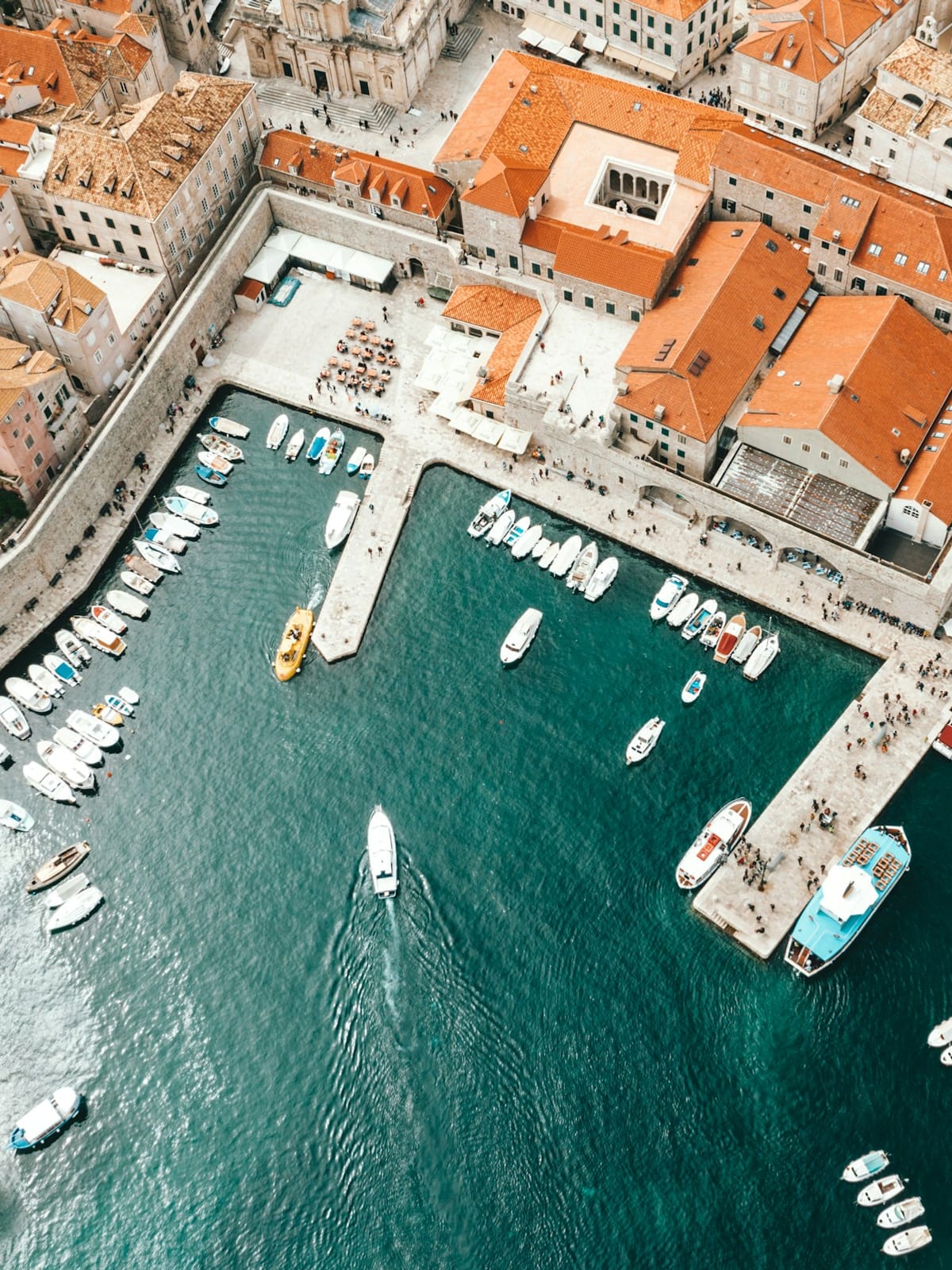
The fast catamaran from Korčula reaches Dubrovnik in ninety minutes and the arrival by sea is the correct introduction: the walls rising straight from the water, Fort Lovrijenac on the rocks, the harbour entrance, and behind it the towers and rooflines of the most complete medieval city in the Mediterranean. Your hotel is in the old town or on the Lapad peninsula. A private guide meets you for the city walls circuit in the afternoon: two kilometres above the old city on the mediaeval ramparts, looking down into the tiled roofs and out across the sea and the Elafiti Islands. The walls are best walked in the afternoon when the light falls from the south-west and the limestone of the rooftops glows. The Stradun at sunset, the Rector's Palace, the Dominican monastery cloister garden. Dinner in the old town.

  • Catamaran arrival — walls rising from the Adriatic
  • City walls circuit in the afternoon light
  • Rector's Palace and Dominican monastery with private guide
  • The Stradun at its best hour
Meals: Breakfast 5★ hotel, Dubrovnik
Day 11 — Departure
Day 11
11

Day 11

Departure

One last morning in the walled city.

The first hour of the morning in Dubrovnik belongs entirely to those who stayed the night — the Stradun is empty polished limestone, the Gundulić Square market is setting up, and the coffee at a bar in the alleys behind the cathedral is the best coffee of the journey. A last walk through the city: the Buža bar built into a gap in the walls above the sea, where the locals have been drinking wine and jumping into the Adriatic since the 1970s; the view from the harbour fortifications. Your private driver transfers you to Dubrovnik Airport at the agreed time. The view of the city walls from the sea road as you leave Dubrovnik is the image that brings people back.

  • Dubrovnik before the cruise ships — the empty Stradun
  • Gundulić Square market and morning coffee
  • The Buža bar in the medieval walls
  • Private transfer to Dubrovnik Airport
Meals: Breakfast

Where You'll Stay

Hand-picked hotels, every night.

We choose properties for character, location, and the kind of service that makes you feel looked after — not just checked in. Every hotel can be swapped for an alternative if you prefer.

4–5★ hotel, Zagreb

Zagreb

1 night

4–5★ hotel

City centre (Lower Town)

Central location walking distance from both Upper and Lower Town

Hotel, Plitvice area

Plitvice area

1 night

Hotel

Near national park entrance

Staying near the park allows early morning entry before tour groups

4–5★ hotel, Zadar / Split

Zadar / Split

2 nights

4–5★ hotel

Split old town or Riva

One night Zadar (or drive through to Split), two nights Split — your specialist will advise on the best split

4–5★ hotel, Hvar

Hvar

1 night

4–5★ hotel

Hvar Town harbour

Walking distance from the main square and the Pakleni Islands boat dock

Boutique hotel, Vis

Vis

2 nights

Boutique hotel

Vis Town

Small island properties with character — Vis has no large hotels by design

4★ hotel, Korčula

Korčula

1 night

4★ hotel

Near old town

Old town hotels are small and atmospheric; larger properties within a short walk

5★ hotel, Dubrovnik

Dubrovnik

2 nights

5★ hotel

Old town or Lapad peninsula

Old town for atmosphere; Lapad for pool and sea access — your specialist will recommend

Hotels shown are indicative of the standard we book. Upon request, we will provide a detailed itinerary with specific hotel options tailored to your preferences and budget.

What's in the Price

Included

  • 10 nights in 4–5★ hotels and boutique island properties
  • Daily breakfast at each property
  • Welcome dinner in Zagreb
  • Private airport transfer in Zagreb
  • All private vehicle transfers between mainland destinations
  • Private boat Split–Hvar
  • Private boat Hvar–Vis
  • Private boat Vis–Stiniva Cove
  • Blue Cave excursion from Vis
  • Private boat Vis–Korčula
  • Fast catamaran Korčula–Dubrovnik
  • Zagreb private guide (art historian)
  • Plitvice Lakes private guide and national park entry
  • Split private archaeologist guide
  • Trogir UNESCO city visit with guide
  • Korčula private guide (island-born)
  • Dubrovnik private guide and city walls circuit
  • Stari Grad Plain visit on Hvar
  • Pakleni Islands boat excursion
  • Vugava estate wine tasting on Vis
  • Dingač wine estate tasting on Pelješac
  • Mali Ston oyster lunch
  • Krka National Park boat and entry
  • Šibenik Cathedral of St James visit
  • All entrance fees for guided visits
  • 24/7 travel specialist support
  • Hamilton & Chase digital travel booklet

Not Included

  • International flights to Zagreb / from Dubrovnik
  • Travel insurance (required — we can arrange on request)
  • Meals not listed
  • Personal expenses
  • Gratuities for guides and drivers
  • City tax (collected by hotels)

Good to Know

  • Vis accommodation is limited — early booking essential, especially July and August.
  • The Blue Cave on Biševo is weather-dependent; rough conditions (it is an exposed islet) can close the access tunnel. Alternative Vis excursions are always arranged.
  • Plitvice in July and August requires early morning entry — staying near the park the night before is essential and is included in this itinerary.
  • The route Zagreb–Dubrovnik is one-way, requiring an open-jaw flight (fly into Zagreb, out of Dubrovnik) — this is the most common and most practical arrangement. Your specialist can advise on airlines.
  • May, June, and September are the recommended months: full island services, manageable crowds at Plitvice and Dubrovnik, and reliably warm swimming weather.

Make It Yours

Optional add-ons & upgrades.

Every trip is different. These extras can be woven into your itinerary — just let your travel specialist know what catches your eye.

Istria extension at the beginning

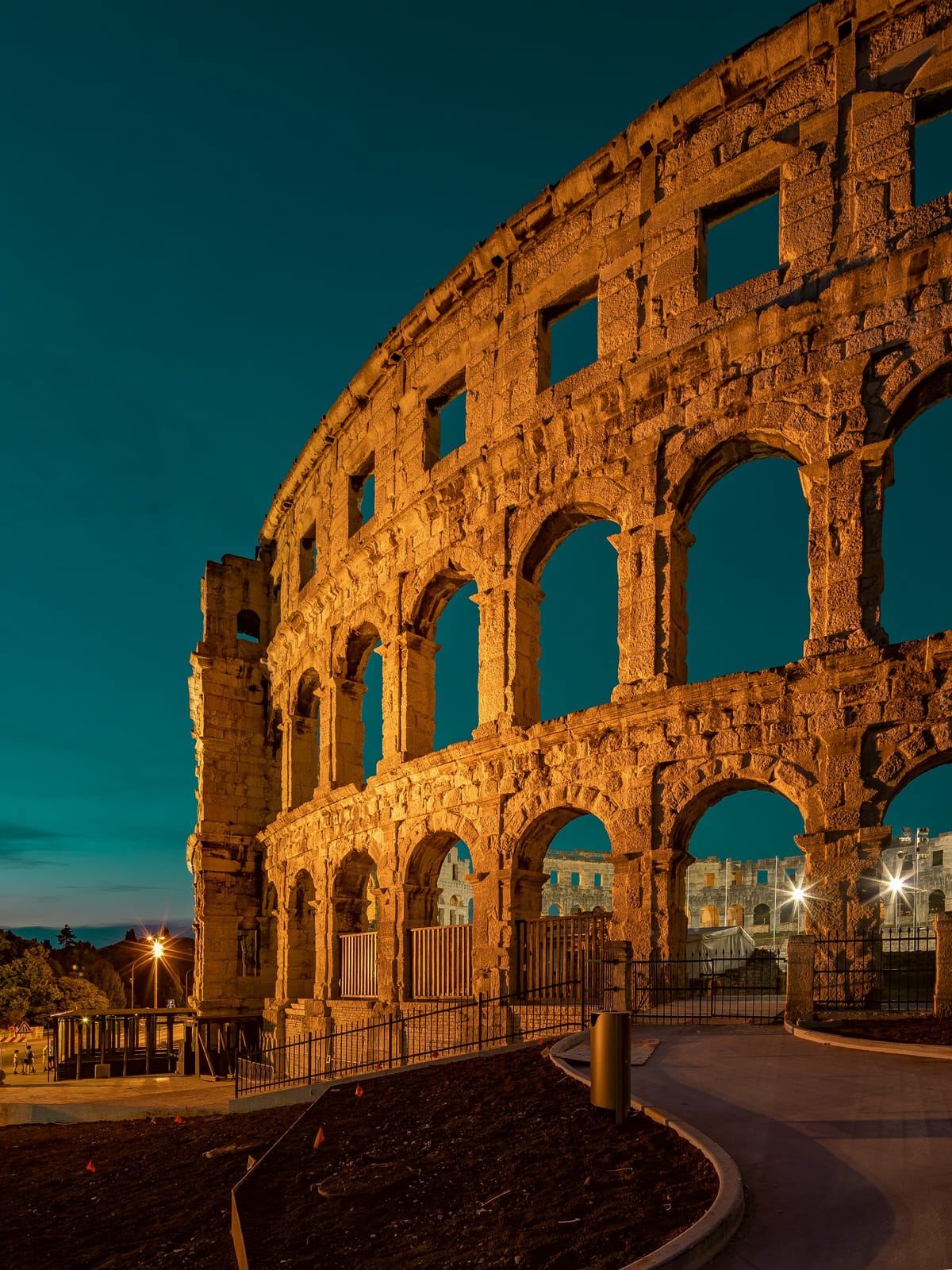
Two nights in Rovinj added before Zagreb — the truffle forests around Motovun, the Roman arena at Pula, and the northern Adriatic character of Istria that is entirely different from Dalmatia. Extends the journey to thirteen days.

From €420 pp

Mljet National Park

The island of Mljet by private boat from Dubrovnik — half national park, saltwater lakes, and a 12th-century Benedictine monastery on an island within the inner lake. The most peaceful day of the journey.

From €130 pp

Elafiti Islands from Dubrovnik

Three car-free islands — Koločep, Lopud, and Šipan — by private boat, with swimming stops and lunch at a family konoba on Šipan

From €110 pp

Private sailing week

Replace the island-hopping by catamaran with a private gulet or sailing yacht from Split to Dubrovnik — the islands and coves accessible only by private boat, with the crew handling navigation and provisioning

Price on Request

"We had ten days and wanted to see all of Croatia. Hamilton & Chase told us eleven days was the minimum and they were right — there was nothing to cut. Zagreb surprised us completely. Plitvice was unlike anything we had seen. Vis was revelatory. And Dubrovnik at the end made sense in a way it would not have if we had started there. The journey had a logic."

Michael & Caroline T.

Toronto, Canada · Epic Croatia, July 2024

Common Questions

Questions about this trip.

Is eleven days the right length for this trip?

It is the minimum for covering Croatia without feeling rushed. The mainland section — Zagreb, Plitvice, Zadar, Split — takes four days at a comfortable pace. The islands — Hvar, Vis, Korčula — need three days minimum to understand what makes each different. Dubrovnik needs two days to see beyond the walls circuit. Guests who have done this itinerary regularly tell us the second day on Vis and the second day in Dubrovnik were the best days of the journey.

Can we start in Dubrovnik and end in Zagreb?

Yes — the reverse direction works well. The narrative is slightly different (the islands build toward Split and Zagreb rather than away from Dubrovnik), but some guests find the flight connections better. Your specialist will advise.

Private Package Journey

Epic Croatia

11 days / 10 nights

From €3,990

per person

Ready to go?

Share a few details and a specialist will reply within one business day.

More Croatia Tours

Prefer to Talk?

Available Mon–Fri 9am–6pm CET.
On-trip support is 24/7.

Plan My Trip