Hamilton & Chase Tours
Ancient Ireland — Private Package 9-day Ireland tour: Newgrange, Belfast, the Giant’s Causeway, Donegal, and the Aran Islands — 5,000 years in nine days.

9-Day Private Package Journey

Ancient Ireland

Newgrange, Belfast, the Giant’s Causeway, Donegal, and the Aran Islands — 5,000 years in nine days.

Available as Private Semi-Private Self-Guided
From €3,390 per person 9 days / 8 nights
View Itinerary

Tour Overview

9 days across Ireland.

Ireland's oldest monuments are not ruins in the conventional sense. The passage tombs of the Boyne Valley — Newgrange, Knowth, and Dowth — were built around 3,200 BC, five centuries before the Great Pyramid of Giza, and they are still structurally sound. Newgrange was designed so that the rising sun on the winter solstice illuminates a chamber that has not been exposed to daylight in the 5,000 years since. This nine-day private journey follows Irish civilisation from the Neolithic to the Norman: the Boyne Valley megalithic complex, the Hill of Tara (seat of the High Kings of Ireland), Belfast and the extraordinary political history of Northern Ireland, the Causeway Coast, County Donegal, the Aran Islands, and Galway. The journey deliberately combines the ancient south with the more recent and contested north — the Giant's Causeway, the Titanic Quarter, and the murals of Belfast's Falls and Shankill Roads are as much part of Ireland's story as Newgrange and the High Crosses.

Detailed Itinerary

Your journey, day by day.

Every day is designed with breathing room. Sleep in, take a detour, linger at lunch — the itinerary flexes around you, not the other way around.

Day 1 — Arrival in Dublin
Day 1
1

Day 1

Arrival in Dublin

The Georgian capital — the beginning of Ireland's recorded history.

Dublin is the entry point to Ireland's recorded story. Your private driver meets you at Dublin Airport and transfers you to your hotel near Merrion Square — the Georgian brick terraces that represent the 18th-century Anglo-Irish aristocracy at its most confident. The afternoon at leisure: Trinity College, the Long Room library, and the Book of Kells — the 9th-century illuminated manuscript that is the most important surviving object of early Christian art in Ireland. The National Museum of Ireland on Kildare Street houses the prehistoric gold collection — the largest collection of prehistoric gold objects in Western Europe, including the Ardagh Chalice and the Tara Brooch — and the Viking Age material from Dublin's Wood Quay. Welcome dinner at a restaurant in the Georgian quarter.

  • Private airport transfer to Dublin
  • Trinity College Long Room and the Book of Kells
  • National Museum — the prehistoric gold collection and Viking Dublin
  • Georgian Dublin at leisure
4–5★ hotel, Dublin city centre
Day 2 — Newgrange and the Boyne Valley
Day 2
2

Day 2

Newgrange and the Boyne Valley

The passage tomb older than the Pyramids.

The Boyne Valley in County Meath is the most concentrated collection of Neolithic monuments in Europe. Newgrange is the centrepiece: a passage tomb built around 3,200 BC whose circular mound is 85 metres in diameter and 13 metres high. The entrance passage runs 19 metres into the burial chamber, which is aligned precisely so that the rising sun on the winter solstice — and only on that day — fills the chamber with light through the roof-box above the door. The site was excavated and partially restored between 1962 and 1975; the white quartz facade is a reconstruction, but the chamber itself is original and intact. Knowth, the largest mound in the complex, has two passage tombs inside and is decorated with the greatest concentration of megalithic art in Europe. The Hill of Tara, a short drive south, was the symbolic seat of the High Kings of Ireland from the Bronze Age to the early medieval period — an open hilltop with earthwork enclosures and the Lia Fáil standing stone. Your specialist guide explains the archaeology and the mythology together.

  • Newgrange passage tomb — 3,200 BC, aligned to the winter solstice
  • Knowth — the largest mound in the Boyne complex with megalithic art
  • Hill of Tara — seat of the High Kings, Lia Fáil standing stone
  • Boyne Valley specialist guide
Meals: Breakfast 4★ hotel, Drogheda or Trim
Day 3 — Belfast
Day 3
3

Day 3

Belfast

The city whose recent history is unlike anywhere else in Europe.

Belfast is a Victorian industrial city with a recent political history that is still being processed. The Titanic Quarter on the former shipyard site where RMS Titanic was built is now home to the Titanic Belfast museum — the world's largest Titanic visitor centre, built on the slipways where the ship was launched in 1911. The museum's six floors trace the ship's construction, its voyage, and its discovery on the ocean floor in 1985 with a directness that the Harland & Wolff workers who built it would recognise. The political murals of the Falls Road and Shankill Road — the Catholic and Protestant working-class streets divided by the Peace Wall — are guided by a local who lived through the Troubles and can explain what the murals mean from both sides. The Cathedral Quarter: the 19th-century linen and tobacco warehouses that now house Belfast's best restaurants, bars, and the Mac arts centre. Belfast's food culture has undergone a transformation in the past decade — dinner in the Cathedral Quarter.

  • Titanic Belfast — the world's largest Titanic museum on the original slipways
  • Falls Road and Shankill Road political murals — guided by a Troubles survivor
  • Cathedral Quarter — the linen warehouse district and Belfast's food scene
  • Belfast Victorian city centre
Meals: Breakfast 4–5★ hotel, Belfast city centre
Day 4 — The Causeway Coast
Day 4
4

Day 4

The Causeway Coast

The Giant's Causeway and the cliff roads of County Antrim.

The Antrim coast road north of Belfast is one of the great coastal drives in the British Isles: the Glens of Antrim dropping to the sea on one side and the cliffs rising on the other. Carrickfergus Castle — the best-preserved Norman castle in Ireland, built in 1177 on a basalt promontory above Belfast Lough — is the first stop heading north. The Carrick-a-Rede rope bridge has connected the mainland to the salmon-fishing rock since the 1700s; the current bridge is 20 metres long and 30 metres above the sea. Dunluce Castle — the 16th-century clifftop stronghold of the MacDonnell clan that appears in Game of Thrones as Castle Greyjoy — stands on a basalt sea stack above a cave. The Giant's Causeway: the UNESCO World Heritage site of 40,000 interlocking basalt columns formed by a volcanic eruption 60 million years ago, accessible on foot along the coastal path from the visitor centre. Your guide explains both the geology and the mythology — Fionn mac Cumhaill building a road to Scotland to fight the giant Benandonner.

  • Carrickfergus Castle — the best-preserved Norman castle in Ireland
  • Carrick-a-Rede rope bridge — 30 metres above the Atlantic
  • Dunluce Castle — the clifftop stronghold above its sea cave
  • Giant's Causeway — 40,000 basalt columns, UNESCO World Heritage
Meals: Breakfast 4★ hotel, Bushmills or Portrush
Day 5 — Donegal
Day 5
5

Day 5

Donegal

The county that faces the North Atlantic on three sides.

Donegal is the most northwestern county of Ireland and the one that most closely resembles the Ireland of popular imagination: the wild coast, the Gaelic-speaking communities, the mountains of quartzite and bog. The drive west from the Causeway Coast crosses into County Derry and then into Donegal past Derry City — whose 17th-century walls are the most complete surviving city walls in Ireland, enclosing a medieval street pattern unchanged since the Plantation of Ulster. Donegal Castle in Donegal town: the 15th-century tower house of the O'Donnell chieftains, extended into a Jacobean mansion by the English who received it after the Flight of the Earls in 1607. The Slieve League cliffs — at 600 metres, nearly three times the height of the Cliffs of Moher — rise from the Atlantic on the southwest Donegal coast. Glencolumbkille in the remote southwest: the valley where St Columba founded a monastery in the 6th century before sailing to Iona.

  • Derry's 17th-century city walls — the most complete in Ireland
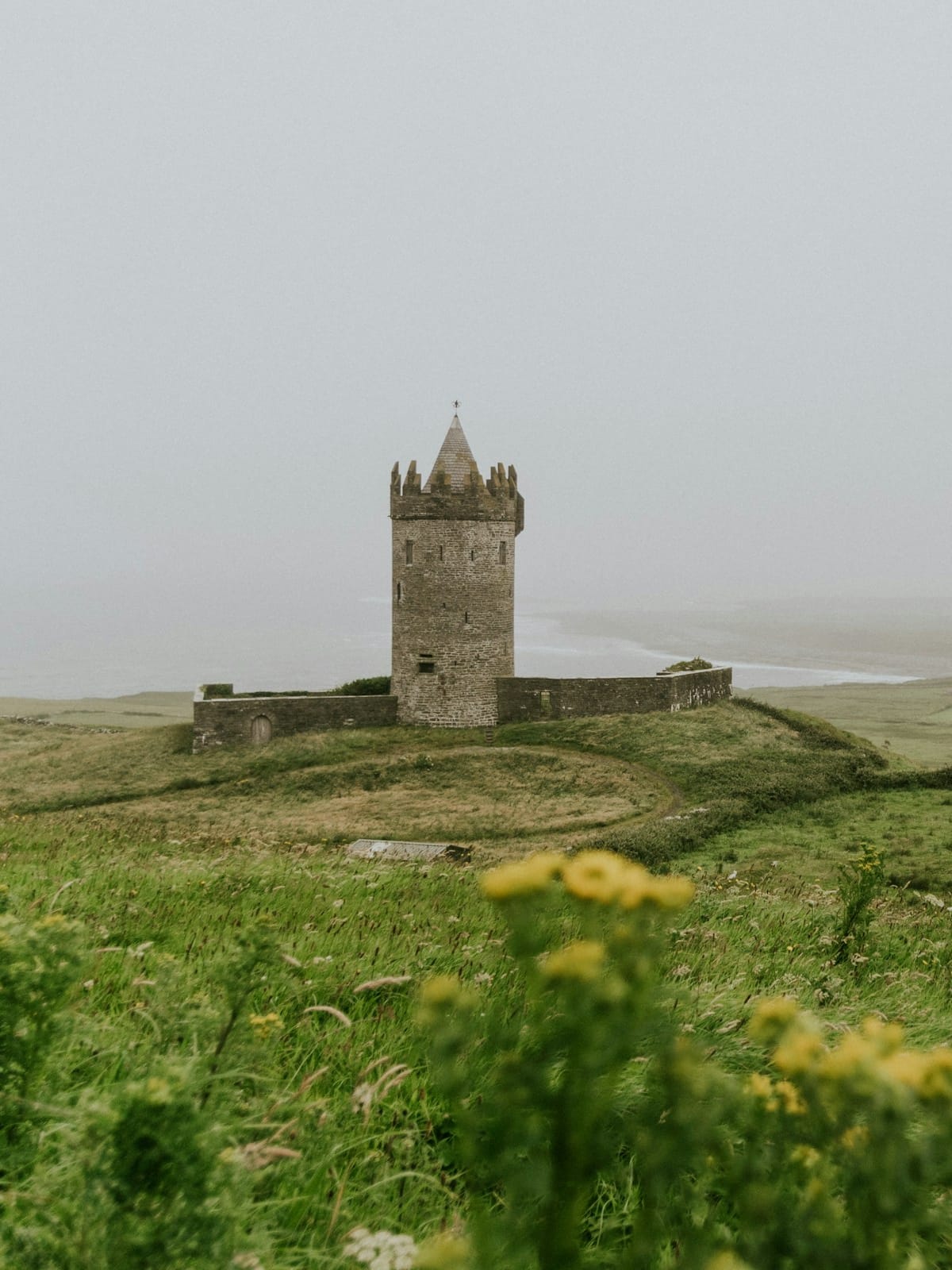
  • Donegal Castle — the O'Donnell chieftains' 15th-century tower house
  • Slieve League cliffs — 600 metres, nearly three times the Cliffs of Moher
  • Glencolumbkille — the valley of St Columba
Meals: Breakfast 4★ hotel, Donegal town or Slieve League coast
Day 6 — Connemara
Day 6
6

Day 6

Connemara

The bog and mountain landscape of the Atlantic west.

The drive south from Donegal follows the western coast through Sligo — past Knocknarea, the cairn-topped mountain where Queen Maeve of Connacht is said to be buried beneath an unexcavated mound — and into County Mayo, where Croagh Patrick, the holy mountain where St Patrick fasted for forty days in 441 AD, rises above Clew Bay. The bay has 365 islands — one for every day of the year, as the legend insists. Connemara begins south of Westport: the vast bogland and mountain landscape whose Twelve Bens rise above Kylemore Lough. Kylemore Abbey — the Victorian castle built in 1867 that became a Benedictine monastery — is one of the most photographed buildings in Ireland. Killary Harbour, Ireland's only true fjord, runs 16 kilometres between mountains to the sea. Galway by evening.

  • Knocknarea — the unexcavated cairn above Sligo Bay
  • Croagh Patrick and Clew Bay's 365 islands
  • Kylemore Abbey — the Victorian castle in Connemara
  • Killary Harbour — Ireland's only fjord
Meals: Breakfast 4–5★ hotel, Galway
Day 7 — Galway and the Aran Islands
Day 7
7

Day 7

Galway and the Aran Islands

The city and the limestone islands where Ireland's oldest culture survives.

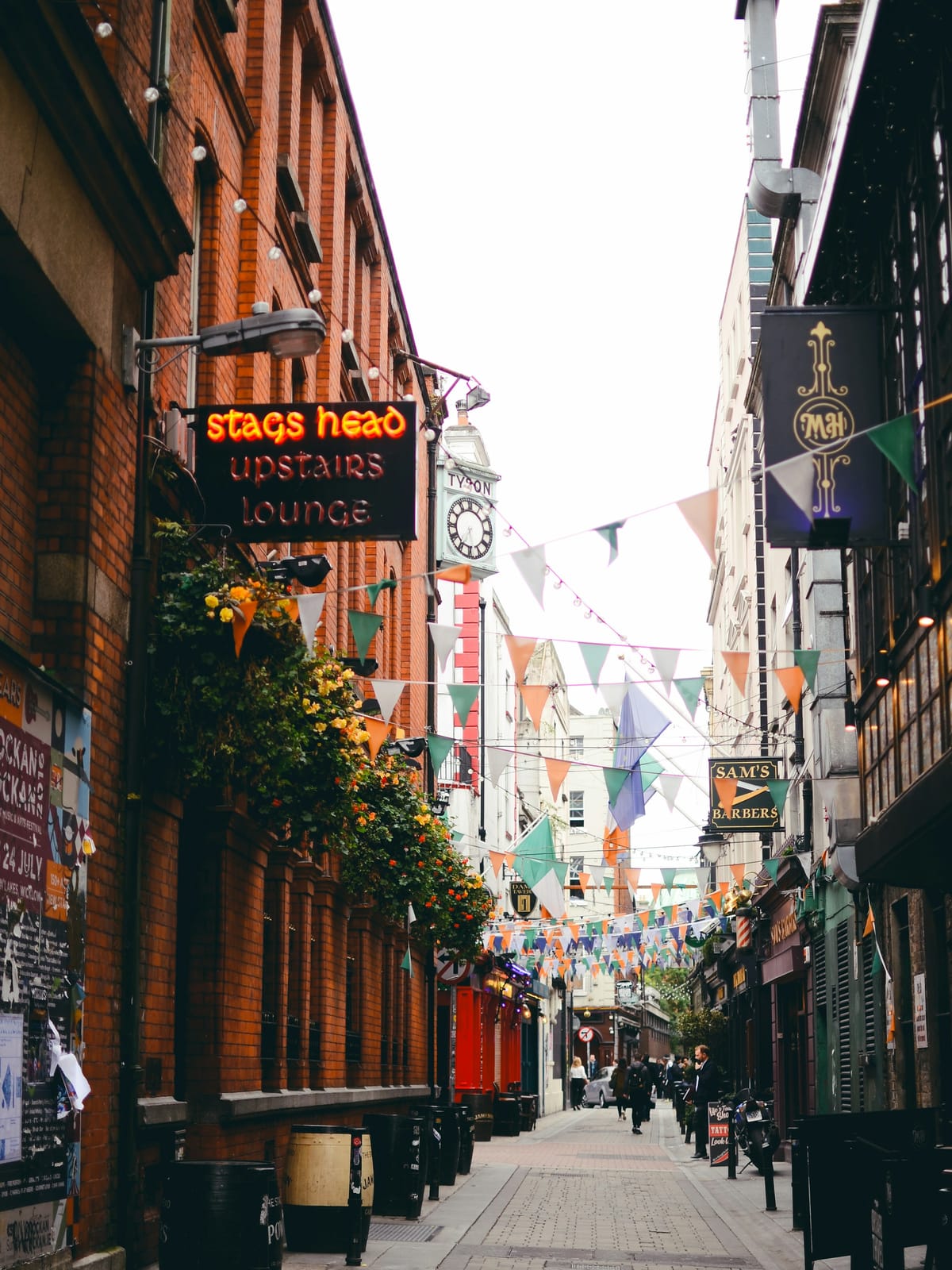
Galway is where the west begins. The city's medieval Latin Quarter, the Spanish Arch — the remnant of the 16th-century wall through which Spanish wine arrived by ship — and the pubs of Shop Street give it a concentrated historic core surrounded by the most energetic pub culture in Ireland. The Aran Islands are visible from the waterfront on a clear day: three limestone islands in Galway Bay whose stone walls, prehistoric forts, and Gaelic-speaking population are the most concentrated expression of the Irish west. The ferry to Inishmore — the largest island — takes forty minutes from Rossaveal. Dún Aonghasa is the defining sight: a semicircular Iron Age fort on the edge of a 90-metre cliff, open to the Atlantic on one side and defended by five rows of sharpened stone stakes (chevaux-de-frise) on the other. The monastery ruins, the limestone pavement, and the hand-built stone walls that divide every field on the island. Your guide explains why this landscape has attracted writers and painters — Synge wrote The Playboy of the Western World after his years on the Aran Islands.

  • Galway city — the Latin Quarter, Spanish Arch, and Shop Street
  • Ferry to Inishmore — the largest Aran Island
  • Dún Aonghasa — Iron Age fort on a 90-metre Atlantic cliff
  • Aran Islands limestone landscape and Gaelic-speaking community
Meals: Breakfast 4–5★ hotel, Galway
Day 8 — Cliffs of Moher and the Burren
Day 8
8

Day 8

Cliffs of Moher and the Burren

The Atlantic cliff edge and the flowering limestone plateau.

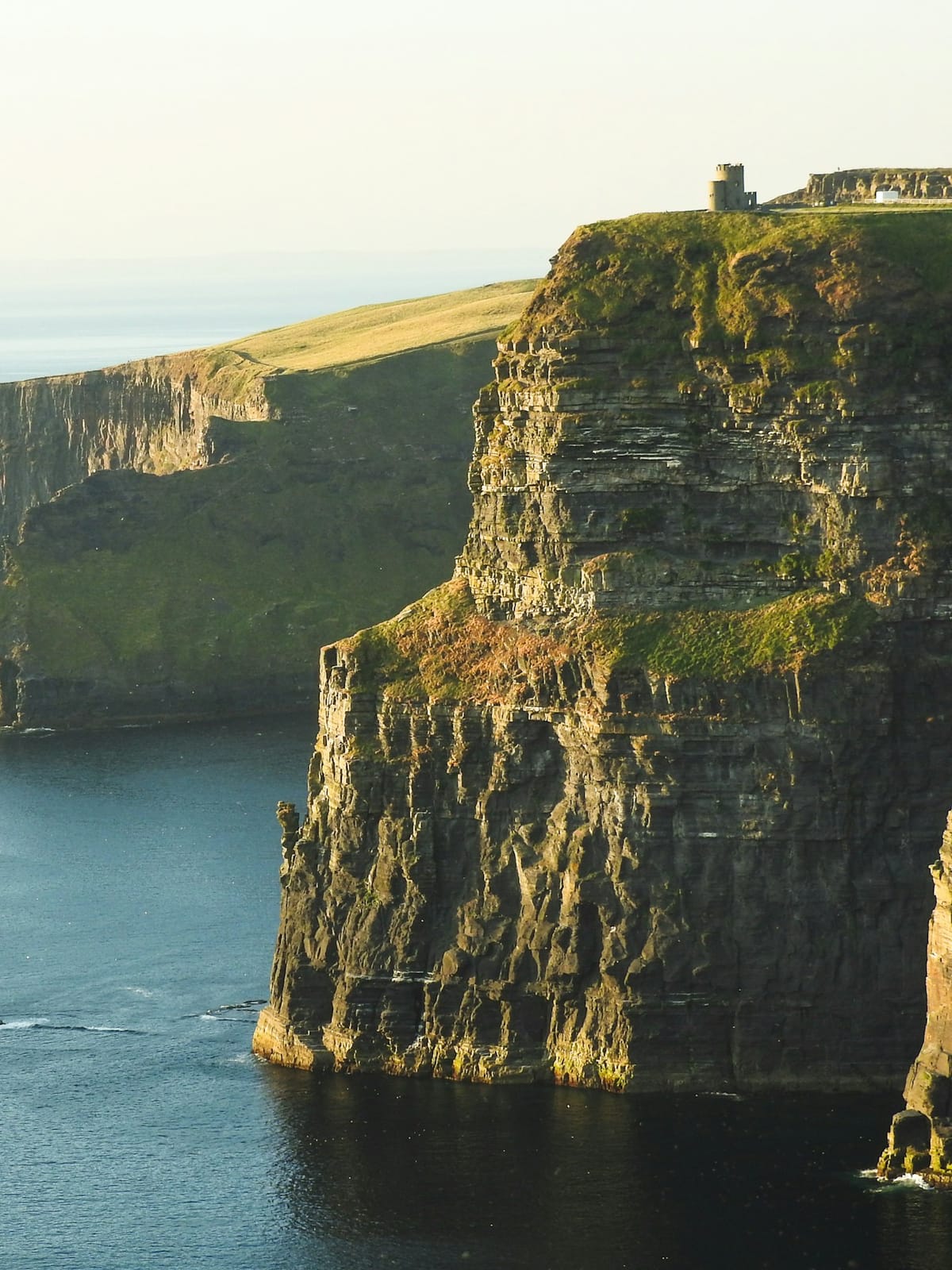
The Cliffs of Moher rise 214 metres from the Atlantic along eight kilometres of Clare coastline. The morning walk from O'Brien's Tower north toward Hag's Head follows the cliff edge with the full Atlantic horizon — at this hour, before the tour coaches arrive, the path belongs to those who stayed nearby. South through the Burren in the afternoon: the 250 square kilometres of karst limestone plateau that supports Arctic, Alpine, and Mediterranean flowers in the same field because the rock acts as a heat store through winter. The Poulnabrone dolmen — a portal tomb built around 4,200 BC — stands in the open limestone pavement, the oldest monument visible from a public road in Ireland. The Aillwee Cave beneath the plateau and the Burren's network of turloughs (seasonal lakes that disappear into the limestone in summer) complete the picture of a landscape that operates by different rules than anywhere else.

  • Cliffs of Moher — 214 metres above the Atlantic
  • Early morning cliff walk before tour groups arrive
  • Poulnabrone dolmen — 4,200 BC, the oldest monument in the Burren
  • Burren limestone plateau — Arctic and Mediterranean flowers together
Meals: Breakfast 4★ hotel, Clare coast or Limerick
Day 9 — Departure
Day 9
9

Day 9

Departure

The end of nine thousand years.

Breakfast and a morning at leisure before your private driver transfers you to Shannon Airport or, if your schedule allows, south to Cork Airport. The drive south from Clare crosses the Shannon estuary at Limerick — a city whose 12th-century King John's Castle and the Hunt Collection (one of the finest private collections of medieval Irish art) are worth an hour if time permits. Your transfer is arranged to suit your flight. The journey has covered Ireland from its oldest monuments to its most recent history — nine days and approximately nine thousand years.

  • Optional: King John's Castle, Limerick — 12th century on the Shannon
  • Private transfer to Shannon or Cork Airport
Meals: Breakfast

Where You'll Stay

Hand-picked hotels, every night.

We choose properties for character, location, and the kind of service that makes you feel looked after — not just checked in. Every hotel can be swapped for an alternative if you prefer.

4–5★ hotel, Dublin

Dublin

1 night

4–5★ hotel

City centre

Merrion Square location for Georgian Dublin and walking distance to the National Museum

4★ hotel, Drogheda or Trim

Drogheda or Trim

1 night

4★ hotel

Town centre

Base for the Boyne Valley complex — both towns are within 15 minutes of Newgrange

4–5★ hotel, Belfast

Belfast

1 night

4–5★ hotel

City centre

Cathedral Quarter location for Belfast's best restaurants and bars

4★ hotel, Causeway Coast

Causeway Coast

1 night

4★ hotel

Bushmills or Portrush

Bushmills puts you within walking distance of the Bushmills Distillery and the Giant's Causeway

4★ hotel, Donegal

Donegal

1 night

4★ hotel

Town centre or Slieve League coast

Staying near Slieve League allows an evening cliff walk in the long summer light

4–5★ hotel, Galway

Galway

2 nights

4–5★ hotel

City centre

Two nights allows the Aran Islands day and a proper Galway evening

4★ hotel, Clare / Limerick

Clare / Limerick

1 night

4★ hotel

Near Cliffs of Moher or Limerick city

Clare coast for an early morning cliff walk; Limerick if departing via Shannon

Hotels shown are indicative of the standard we book. Upon request, we will provide a detailed itinerary with specific hotel options tailored to your preferences and budget.

What's in the Price

Included

  • 8 nights in 4–5★ hotels
  • Daily breakfast at each property
  • Private airport transfer at Dublin
  • Private vehicle and driver throughout
  • Dublin guided visit including National Museum
  • Boyne Valley specialist guided visit (Newgrange, Knowth, Tara)
  • Belfast guided city tour including Titanic Belfast and political murals
  • Giant's Causeway and Causeway Coast guided circuit
  • Donegal guided visit including Slieve League
  • Connemara guided circuit
  • Aran Islands ferry and guided visit
  • Cliffs of Moher entry
  • Burren guided walk including Poulnabrone dolmen
  • All entrance fees for guided visits
  • 24/7 travel specialist support
  • Hamilton & Chase digital travel booklet

Not Included

  • International flights to Dublin / from Shannon or Cork
  • Travel insurance (required — we can arrange on request)
  • Meals not listed
  • Personal expenses
  • Gratuities for guides and drivers
  • City tax (collected by hotels)

Good to Know

  • This tour crosses the border between the Republic of Ireland and Northern Ireland — no passport required for EU and UK citizens, but non-EU visitors should check entry requirements. Northern Ireland uses GBP; the Republic uses EUR.
  • Newgrange entry is timed and limited — advance booking via the Brú na Bóinne visitor centre is essential, especially in summer.
  • The Slieve League cliffs are at their most dramatic in the long evening light of June and July — the extra daylight is a significant advantage for this itinerary.
  • The Aran Islands ferry from Rossaveal operates year-round but is weather-dependent — cancellations are rare in summer but do occur.

Make It Yours

Optional add-ons & upgrades.

Every trip is different. These extras can be woven into your itinerary — just let your travel specialist know what catches your eye.

Newgrange winter solstice experience

Access to the chamber during the actual sunrise illumination on 19–23 December — allocated by lottery by the Office of Public Works. Hamilton & Chase can assist with the application; places are extremely limited.

By lottery only

Bushmills Distillery private tour

Private guided tour of the world's oldest licensed whiskey distillery (1608) in the village of Bushmills, a mile from the Giant's Causeway. Includes a tasting of single malt and blended Irish whiskey.

From €55 pp

Derry walking tour with Troubles historian

A two-hour walking tour of Derry's city walls and the Bogside murals with a historian who lived through the events they depict — including Bloody Sunday (1972) and the civil rights movement.

From €65 pp

Skellig Michael boat trip

Can be added as a Kerry extension — the UNESCO World Heritage island where monks built a monastery in stone beehive cells between the 7th and 12th centuries. Requires itinerary adjustment.

From €75 pp

"We came expecting landscapes and got history we didn't know we needed. The Boyne Valley guide explained Newgrange as if the people who built it were still there. Belfast was the most unexpectedly moving day of the trip — not despite its recent history but because of it. Hamilton & Chase understood exactly what we were looking for."

Robert & Susan F.

Toronto, Canada · Ancient Ireland, September 2024

Common Questions

Questions about this trip.

Is crossing the Northern Ireland border complicated?

No. The border is open and unmarked — you cross it on the main road without formality. The practical differences are that Northern Ireland uses GBP instead of EUR and driving is on the left (as in the Republic). Your private driver handles all logistics. Non-EU visitors should verify their visa status covers both jurisdictions.

How much of this tour is ancient versus modern history?

Roughly equal. The Boyne Valley and Aran Islands represent prehistoric Ireland (3,200 BC–400 AD); the monasteries and high crosses are early medieval (500–1200 AD); the Norman castles and Donegal are late medieval; Belfast and Derry are 20th century. The nine days span nine thousand years without spending too long in any one period.

Private Package Journey

Ancient Ireland

9 days / 8 nights

From €3,390

per person

Ready to go?

Share a few details and a specialist will reply within one business day.

More Ireland Tours

Prefer to Talk?

Available Mon–Fri 9am–6pm CET.
On-trip support is 24/7.

Plan My Trip